

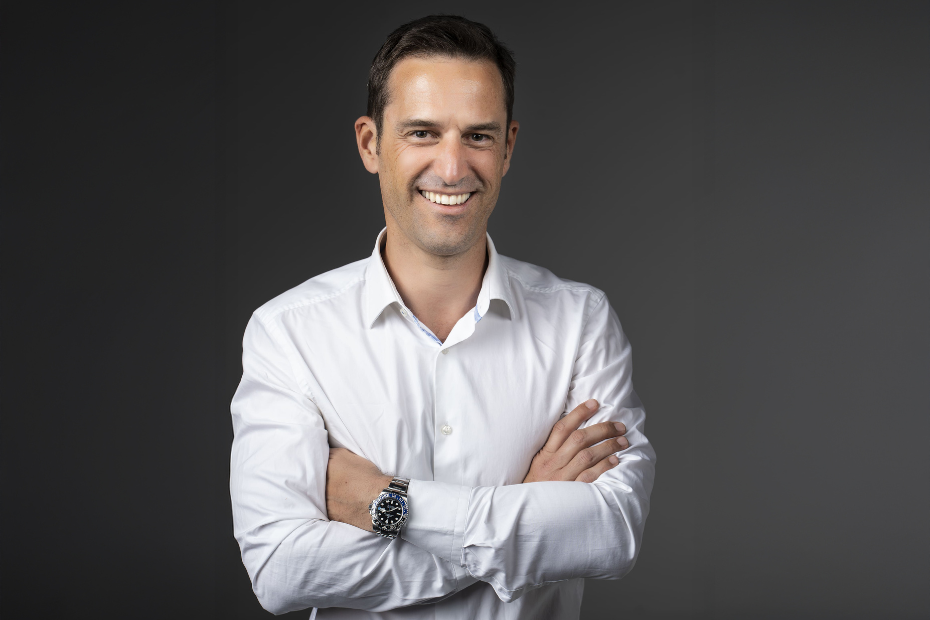
David Noël, regional vice president at Dynatrace Middle East/Image: Supplied
As artificial intelligence dominates sustainability debates, a quieter crisis is unfolding in data centers around the world — one that consumes massive energy, drives unnecessary hardware turnover, and inflates both carbon footprints and operating costs. According to David Noël, regional vice president at Dynatrace Middle East, the real environmental cost of digital transformation lies not in algorithms, but in the invisible inefficiencies buried inside enterprise infrastructure.
“AI’s energy consumption is significant and deserves attention to drive a much-needed conversation about systemic inefficiencies that have plagued IT infrastructure for years,” Noël explains. “The reality is that idle or ‘zombie’ servers consume between 27 per cent and 36 per cent of their maximum power even when performing little to no useful work. When you scale that across thousands of servers in enterprise data centers, the waste is staggering.”
The hidden carbon cost of IT
While AI’s training models attract headlines, Noël argues that the daily drain from under-utilised servers and short hardware lifecycles is a far greater sustainability challenge — and one that most enterprises fail to see. “These inefficiencies are invisible to most organisations due to siloed data and limited operational awareness. We’re essentially powering and cooling servers that deliver no meaningful computing output,” he says.
Short refresh cycles compound the problem. “Add to that the short hardware lifecycles driven by unnecessary upgrades, and you have a sustainability challenge that dwarfs AI’s impact. AI should be the catalyst that forces us to reassess IT resource efficiency across the board, not a scapegoat that distracts from addressing the broader problem.”
Dynatrace, Noël notes, has repeatedly observed this imbalance in boardroom discussions. “AI conversations often dominate strategy, while vast underutilisation across hybrid environments goes unaddressed. By using Davis AI and Smartscape, organisations can automatically identify idle servers and poorly allocated workloads in real time — turning silent inefficiencies into measurable opportunities.”
Energy efficiency often takes center stage in sustainability planning, but Noël says companies overlook another crucial metric — embodied emissions. “Embodied emissions refer to the greenhouse gases released during the entire lifecycle of hardware — from raw material extraction and manufacturing to transportation and eventual disposal. Research shows that these embodied emissions can account for more than half of total lifecycle emissions, which fundamentally challenges the assumption that operational energy use is the primary environmental concern.”
The issue is particularly relevant in the Gulf, where most IT hardware is imported. “Every time we prematurely replace functioning servers or fail to properly recycle outdated equipment, we’re triggering another cycle of resource-intensive manufacturing,” Noël explains. “The environmental cost of producing a new server is already embedded before it’s even powered on. This is why sustained use and reuse aren’t just nice-to-have practices — they’re critical to any genuine sustainability strategy.”
For many enterprises, extending hardware lifespans can deliver larger emissions savings than upgrading to marginally more efficient models. “It’s often more environmentally responsible to extend the life of existing hardware than to upgrade to slightly more energy-efficient models,” Noël adds.
Zombie servers and the myth of efficiency
So-called zombie servers — those powered on but performing no useful work — remain widespread in corporate data centers. “Zombie servers are far more prevalent than most CIOs realise, because they’re hidden in plain sight,” Noël notes. “Without proper observability, organisations simply don’t know which servers are idle versus which are genuinely supporting business operations.”
The consequences extend far beyond carbon footprints. “From a sustainability perspective, these servers represent pure waste — they’re consuming resources without purpose. But the operational cost implications are equally significant,” he says. “Organisations are paying for power, cooling, maintenance, and valuable data-center space for assets that contribute nothing.”
If enterprises managed utilisation effectively, Noël believes “approximately every second server might not need to be produced and installed to begin with — the potential for both environmental gains and cost savings becomes clear.”
The Gulf’s opportunity to lead
The Middle East’s rapid digital transformation is unfolding in parallel with ambitious national net-zero agendas. Noël argues that this convergence positions the region to lead global change. “The Gulf region presents a unique convergence of ambitious digital transformation and equally ambitious sustainability commitments,” he says.
Saudi Arabia, for instance, is developing new data-center capacity “designed for AI workloads with 1.5 GW powered by renewables,” while the UAE is “tackling electronic waste through regulation and public-private partnerships.”
Yet, Noël cautions, “building efficient new infrastructure is only part of the equation. The real opportunity lies in optimising what’s already operating. As the region scales up its digital capabilities, addressing infrastructure waste becomes not just an environmental imperative but a strategic one.” Dynatrace’s dedicated SaaS cloud in Abu Dhabi, he adds, “helps regional enterprises scale observability securely while meeting data-residency laws.”
For most enterprises, automation has long been the tool of choice for operational efficiency. Noël contends that while automation is useful, it’s no substitute for true observability. “Traditional automation executes predefined tasks based on rules and thresholds — it’s reactive by nature,” he explains. “Observability, by contrast, provides real-time insight and context into how infrastructure is actually performing, enabling teams to understand not just what’s happening, but why it’s happening. This distinction is crucial for sustainability.”
Observability, he continues, “delivers the data organisations need to identify underutilised resources, reduce energy waste, and maximise hardware utilisation in ways that static automation simply cannot.” For example, it can reveal hidden energy-consumption patterns and dynamically redistribute workloads, transforming sustainability “from an abstract goal into measurable outcomes with clear accountability.”
Concerns about balancing sustainability with performance often deter CIOs from extending hardware lifespans. Noël calls this a misconception. “This perceived trade-off is often overblown. The key is strategic rather than blanket approaches to hardware management. Not every workload requires the latest hardware.”
Read: Low-code, AI adoption surges in MEA as CIOs tackle app backlogs, finds report
With sufficient insight, enterprises can assign workloads intelligently. “Organisations can achieve significant environmental gains by utilising older, cheaper hardware to maintain existing systems while reserving new investments for workloads that genuinely require cutting-edge capabilities,” he explains. “With Dynatrace, teams can match workloads to available infrastructure based on real usage patterns. The goal isn’t to compromise performance — it’s to eliminate waste where it exists and invest strategically where it matters.”
A regional blueprint for green IT
Noël believes Gulf enterprises are uniquely positioned to set global sustainability benchmarks. “The convergence of massive infrastructure investment, government commitment to sustainability, and relative freedom from legacy constraints creates unique conditions for innovation,” he says. “Organisations here aren’t just retrofitting decades-old data centers — they’re building next-generation infrastructure with sustainability considerations built in from the ground up.”
The partnership with Dubai Customs, where observability supports both agility and green IT goals, demonstrates what is possible. “By implementing observability-driven approaches that maximise resource efficiency, properly managing hardware lifecycles, and transparently reporting on sustainability metrics, Gulf enterprises can prove that rapid digital advancement is possible without proportional environmental cost.”
What will truly set global benchmarks, Noël adds, “is demonstrating that digital transformation and environmental responsibility aren’t competing priorities but complementary ones.”
Asked for one actionable recommendation to CIOs in the Middle East, Noël’s answer is straightforward: start with visibility. “Implement comprehensive observability across your IT infrastructure immediately. You cannot fix what you cannot see, and most organisations are operating blind when it comes to resource utilisation.”
“Dynatrace enables this visibility without needing major system changes — making it a fast win on both cost and carbon,” he adds. “Once you can see where waste occurs, the path to action becomes clear, and the business case writes itself through combined cost savings and sustainability improvements.”
As sustainability regulations tighten globally, Noël sees observability as both a compliance enabler and a competitive differentiator. “The CIOs who act now will not only reduce emissions and operational costs but will also position their organisations favorably as sustainability regulations continue to tighten across the region. Visibility creates accountability, and accountability drives change.”
