
:max_bytes(150000):strip_icc():format(jpeg)/GettyImages-1235402271-26cfd11560394f65a845f992aa5cf22f.jpg)
Key Takeaways
- Bridgewater Associates founder Ray Dalio warns that growing wealth inequality is driving both left- and right-wing populist movements.
- These movements are creating “irreconcilable differences” that threaten the stability of the markets.
- Government intervention in private business signals a shift toward state capitalism that Dalio says mirrors the dangerous era of the 1930s.
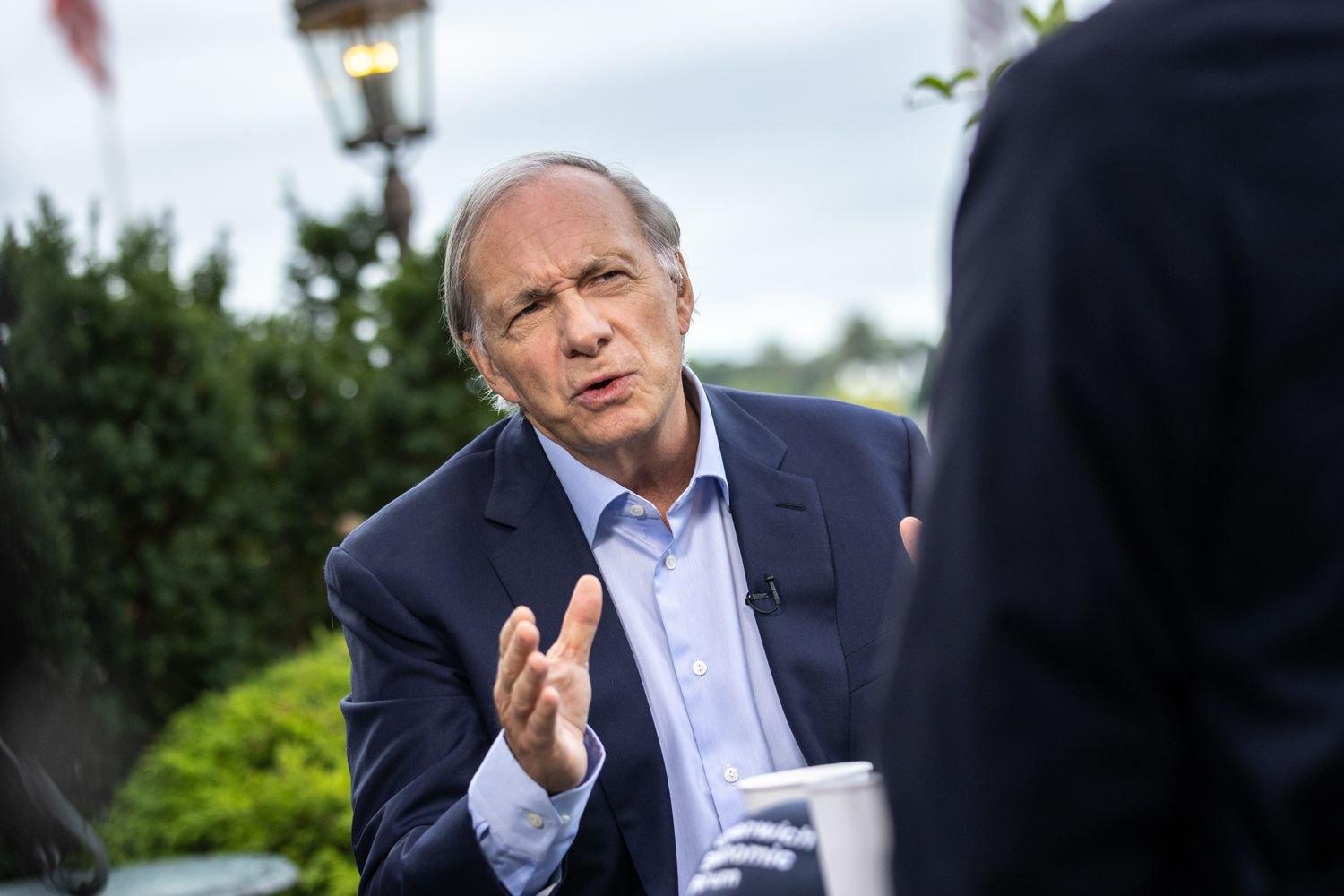
Ray Dalio isn’t just worried about markets—he’s worried about democracy itself. In an interview with the Financial Times this week, the Bridgewater Associates founder compared today’s widening “wealth and values gaps” with the 1930s, when he says economic extremes fueled the rise of authoritarian governments.
The situation, he said, is creating “irreconcilable differences” that can’t be resolved through normal politics. Despite the markets rising throughout a politically turbulent 2025, Dalio advises against investors taking the political storms as merely background noise—they could directly threaten your portfolio.
The Ever Widening US Wealth Gap
The data backs Dalio’s concerns about economic inequality. Since 1989, the richest 0.1% have increased their wealth share by 60%, while the bottom half has seen theirs plummet by 46% (see the above chart).
When inequality reaches such extremes, Dalio warned, political pressure builds to the breaking point. “The increased wealth and values gaps lead to increased populism of the right and populism of the left,” he said, “and irreconcilable differences between them that can’t be resolved through the democratic process.”
The result, according to Dalio, is a shift away from democratic norms. “Democracies weaken and more autocratic leadership increases as a large percentage of the population wants government leaders to get control of the system to make things work well for them—e.g., ‘to make the trains run on time.'” As such, “governments are now increasingly taking control of businesses and the economy,” he said.
Your Portfolio’s Hidden Political Risks
Dalio discussed specific recent economic interventions as indications of “strong autocratic leadership,” although he demurred when the Financial Times interviewer asked him if Trump’s economic model was “authoritarian.” “I’d rather try to explain the mechanics of what is happening in a less evocative way,” he said. Here are the interventions he had in mind:
These aren’t tax tweaks—they’re industry-reshaping moves.
On the left, Dalio highlighted Zohran Mamdani, a Democratic socialist and New York mayoral candidate, who has proposed raising the city’s minimum wage to $30 an hour, expanding rent control, and creating city-owned grocery stores. Dalio sees these ideas as a sign of how frustration with inequality is pushing politics toward more radical experiments.
Fast Fact
Despite his nod to Mamdani, a mayoral candidate in just one American city whose campaign proposals are an election and much political haggling from becoming law, he was clear about a sinister atmosphere created by those already holding office: “Most people are silent because they are afraid of retaliation,” he said.
How Politics Is Already Reshaping Markets
Dalio sees five converging forces that “will lead to huge and unimaginable changes over the next five years”:
- The debt cycle: America’s ballooning debt risks a “heart attack” that could undermine the dollar and Treasury markets.
- Domestic political fractures: Widening wealth gaps are eroding trust in democratic processes.
- Geopolitical rivalry: He pointed toward the one between the U.S. and China, where control of technology could tip the balance of economic and military power. “Whichever country wins the technology and economic wars will win the more important geopolitical and possibly military wars,” he said.
- Acts of nature: From pandemics to climate change, natural shocks could spur increasing market volatility.
- Technological disruption: AI and other major shifts could reorder economies faster than governments or markets can adapt.
What Investors Can Do
Dalio’s warnings go beyond what you might do as a citizen to what you can do as an investor:
- Diversify beyond U.S. markets: Holding some international equities, bonds, or gold can help protect you against domestic policy shocks.
- Watch concentration risk: If your money is disproportionately invested in politically sensitive sectors like tech or defense, consider balancing them out with less politically exposed industries.
- Keep liquidity in mind: Political upheaval can spark sudden volatility. Having some cash or short-term Treasurys gives you more options.
- Focus on quality: Companies with strong balance sheets and global footprints are more likely to withstand sudden government interventions.
The Bottom Line
Ray Dalio argues that wealth and values gaps are now driving a politically dangerous turn for the markets. As governments like the current U.S. administration increasingly intervene far more in private business than any in memory, you can ensure you have a diversified portfolio that isn’t overly concentrated in politically sensitive sectors, maintain some international exposure to hedge against domestic policy shocks, and keep enough cash on hand to navigate any sudden volatility.
