

:max_bytes(150000):strip_icc():format(jpeg)/GettyImages-1220068378-681ca44464874382bdc9a4abfbd11b08.jpg)
President Trump’s tariffs have sparked sharp debate about the costs of imports and the benefits of reshoring production to the United States. But many goods move through several countries in the manufacturing process, and consumers are not always clear where a product labelled “Made in China” originates.
Products sold in the United States must be marked with their country of origin, including those imported from foreign countries. There are specific guidelines, including clear labeling and the substantial transformation test, to determine the country of origin. Below, we examine the rules for domestic and foreign products and how they impact you.
Key Takeaways
- Imported products must be clearly labeled with their country of origin, even if part of the process occurs in a third country.
- The country of origin is determined by the substantial transformation test, which determines where the product underwent a substantial change.
- For a product to be labelled “Made in America,” the parts and labor must be “all or virtually all” American.
- U.S. products that do not meet the standards for a “Made in America” label might get a qualified label, like “Assembled in U.S.A. with foreign parts.”
- In contrast, a “Made in China” label does not need to specify if it has components from other countries.
What Are the Rules for “Made in USA”?
Domestic product guidelines are governed by the Federal Trade Commission (FTC). These rules forbid any “deception and unfairness in the marketplace…against false or misleading claims that a product is of U.S. origin.”
According to the FTC, any product with a “Made in USA” label must be made “all or virtually all” in the United States or its territories. This means that almost 100% of the parts and labor must be American, and that any imported components make up a negligible portion of the final product’s cost. Products that don’t meet these standards must carry a qualified label, such as “70% U.S. Content” or “Assembled in America from foreign and domestic parts.”
Fast Fact
The FTC finalized its Made in USA rules in August 2021 and included products sold online and in catalogs.
What Does “Made in China” Mean?
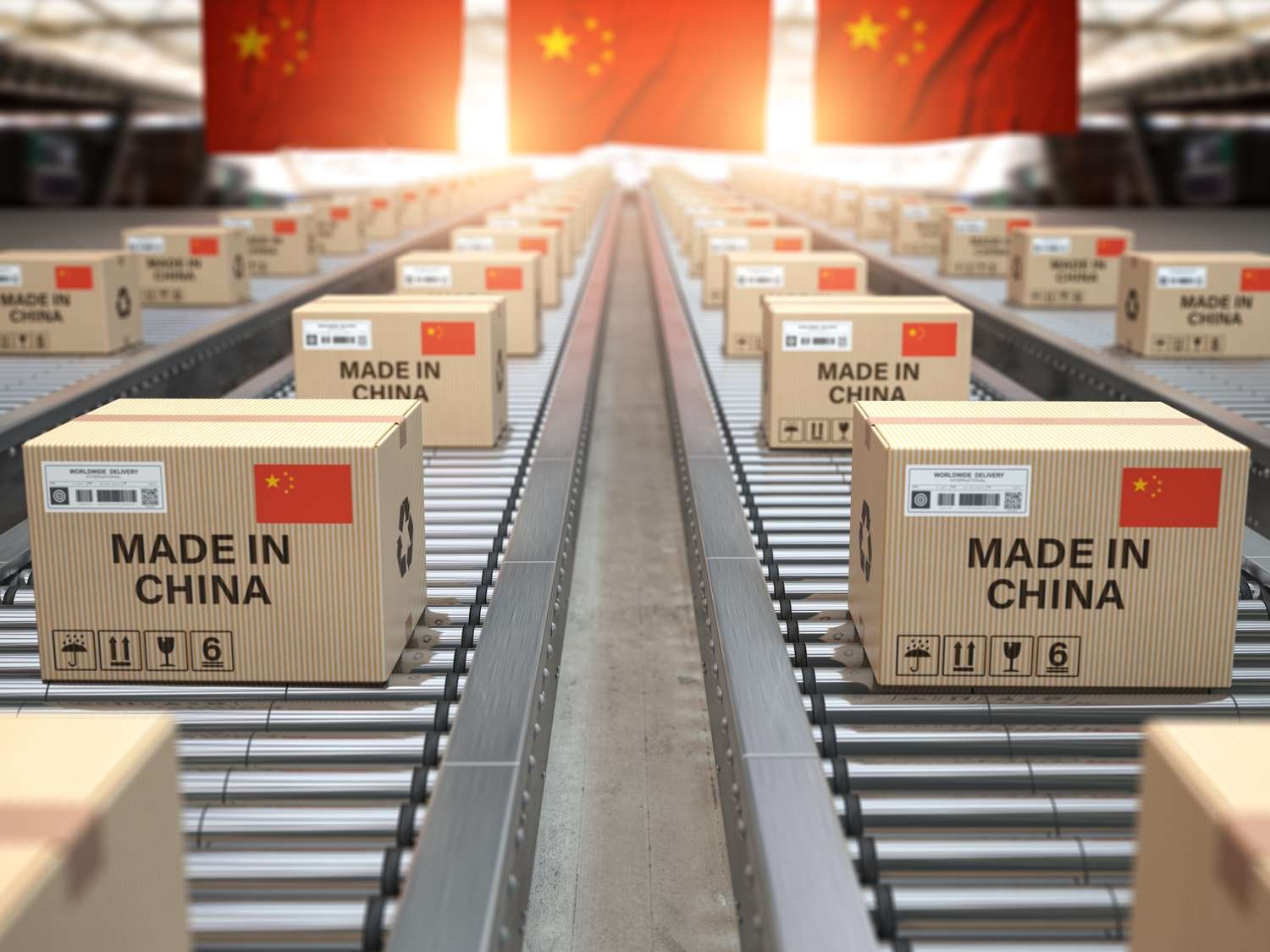
U.S. Customs and Border Protection requires virtually every imported product to be clearly and legibly marked with its country of origin. But, things can get a little tricky when it comes to manufactured goods, which may pass through several different countries before they’re completed.
The label is based on the “substantial transformation” test in these cases. This states that if a product doesn’t originate in a single country, the country of origin is where it “underwent a fundamental change in form, appearance, nature, or character” to become a new product.
For instance, a product may have parts from different countries that are sent to a factory in Guangzhou to be put together. Since the final assembly occurs in China, it gets a “Made in China” label. If that product is then repackaged in Vietnam—without a “substantial transformation”—the product would still be labelled “Made in China.”
Here are a few examples:
- Batteries, chips, and screens are often manufactured in countries like Japan, South Korea, and the U.S., before being sent to China to make smartphones. Even though the components are manufactured elsewhere, they undergo a significant change in China, so they get a “Made in China” label.
- A fashion house may manufacture handbags with leather from Italy, zippers from Japan, interfacing from Indonesia, silk lining from India, and clasps and buckles from Vietnam. These materials are sent to a factory in China where they are sewn into purses. Since the materials change substantially, the purses earn a “Made in China” label.
But what if the handbag company adds a decorative logo in Italy after finishing the purses? This likely does not constitute a fundamental change under the country of origin rules, which means the product is still considered to be made in China.
How Does It Impact You?
Knowing the country of origin often affects consumer perceptions and market prices. Products made in the U.S. tend to invoke a strong sense of national pride among domestic consumers and are perceived as relatively high quality. Consumers may also believe domestic manufacturing has economic benefits, such as supporting local jobs and businesses.
Imported goods, on the other hand, tend to conjure negative feelings due to:
- Product quality: Products imported from overseas may be suspected of having lower quality, because of the cheaper materials and manufacturing costs, even if they have parts from the U.S.
- Safety concerns: Regulations and safety standards differ by country, so some products from different countries may be made with unsafe materials. For instance, cosmetics may contain harmful chemicals, or toys may have lead paint.
On the other hand, imports often have price advantages. Products made overseas tend to be more affordable for the average consumer. The country benefits from a large labor market, lower wages, and an efficient manufacturing sector—all of which can reduce the production cost per unit.
The Bottom Line
Consumers often look to product labels before judging their quality and price. There are strict rules for product labeling, but imports have different requirements from domestic products.
While products with a “Made in America” label must be almost entirely sourced from the United States, the same is not true for imported goods. A product with a “Made in China” label may include components from other countries, or it may go through minor changes in a third country before it ends up in your store.
