
This article is an on-site version of our Moral Money newsletter. Premium subscribers can sign up here to get the newsletter delivered three times a week. Standard subscribers can upgrade to Premium here, or explore all FT newsletters.
Visit our Moral Money hub for all the latest ESG news, opinion and analysis from around the FT
Welcome back.
Elon Musk may be gone from Washington, but the severe cuts he spearheaded to US aid spending are set to stay. Rather than stepping in to fill the gap, other rich nations — notably the UK — have been making big cuts of their own.
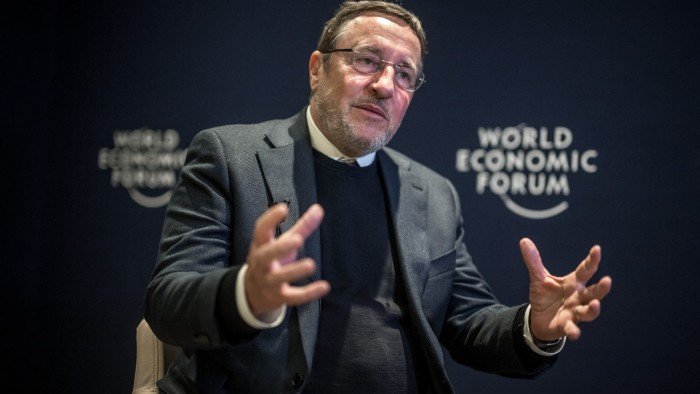
What will this mean for crisis-hit nations, and for the world as a whole? I discussed this with Achim Steiner as he prepares to leave the UN Development Programme on June 16, after 10 years at the helm of the UN’s main development agency.
INTERNATIONAL AID
Outgoing UNDP head: International development system faces a ‘tipping point’
This transcript has been edited for length and clarity
Simon Mundy: In your foreword to UNDP’s latest annual report, you wrote that you’re seeing a “retreat” around international development finance. How serious is this retreat and how serious could the implications be?
Achim Steiner: It’s very serious. What we are seeing right now is an unprecedented — both in terms of scale and, let’s say, short notice — withdrawal of tens of billions of dollars from a humanitarian and development ecosystem that has grown over many decades.
You can begin to see that when you see our inability, for example, through [the World Food Programme], to continue to provide the rations that are needed in refugee camps, whether it’s the Rohingya in Myanmar or many of the other refugee camps around the world. You can also see that in the way that the UN, at the moment, is not able to step up in Sudan, where millions of people are either internally displaced or have become refugees.
It goes right through also to millions of people who depended on the international partnerships around the Global Fund and Pepfar, the US-backed programme to support people with HIV/Aids. Literally overnight, clinics are closing, supply chains are disrupted, and people are not receiving antiretroviral treatments.
So you are literally talking about life-threatening consequences, and on a scale that is affecting many parts of the globe.
It’s not just about funding development or humanitarian support. It’s also a retreat — and that is why I use that term very deliberately — from an understanding and a commitment to investing together in development in our age.

You know, when we met in 2015 in the UN General Assembly and adopted the 2030 agenda and the Sustainable Development Goals, that was not an act of faith. It was a declaration of mutual interdependence, recognising that we live in an age where the risks to our national security — but also our individual and human security — are increasingly going to be either mitigated, or continue to grow, based on our ability to work together.
The pandemic was a very clarifying moment. If we had not been able to work together, despite the stumbling nature of that initial response, who knows whether we would have beaten Covid-19 as quickly as the world then did?
All of this essentially presupposes a capacity to invest in co-operation, even when there are not always identical interests involved. Shared interest is a sufficiently clear basis on which to address these threats and risks to our economies, our national security, and indeed to the long-term economic development. And that is really where we see a retreat, first of all, away from investing in this collective capacity to act.
Secondly, we also see with the United States now having announced in the House a budget that essentially defunds the regular budget contribution of the United States to the UN and most of the UN agencies. You have seen the extraordinary impact that the US withdrawal from the World Health Organization will have, not only in financial terms, but also more broadly.
That is why I think one can genuinely say this is very serious. Because it is not only a momentary swing in one country’s politics, but this is on top of a world that is increasingly polarised with more and more geopolitical conflicts and tensions.
The fact that we are massively increasing defence spending while defunding development should give us a cause for pause — at least in order to have a perhaps more calm debate about where the great risks of the future are really coming from.
SM: Are you expecting — beyond cuts that have already been announced — that there could be further cuts to follow, that this could actually get much worse?
AS: Well, on the US side, I think it can’t get much worse. If you take the budget for 2025-26 that the House has now submitted to the Senate, tens of billions of dollars that the US used to invest in international co-operation have simply been cut. The largest donor in absolute terms has literally disappeared from the international arena, in large part.
We have also seen the UK being among the most drastic of the OECD countries, essentially defunding a tradition of engagement and being a strategic partner to many developing countries in the Commonwealth and beyond. Unfortunately, others are following now.
We have seen other OECD countries announce decreases in core [UN] funding and in funding in general. This year, there’s the Netherlands, Switzerland, we expect also Belgium; Australia, which has just cancelled its core funding contribution to UNDP for the current year. These are all decisions that essentially weaken the institution and ultimately compromise its ability to be one of the backbones for international co-operation.
SM: I think what you’re saying is that these cuts will cause a structural destruction of capacity in the international development system, from which it will be very hard to recover, even if funding later goes back to higher levels. Am I understanding that right?
AS: Absolutely. That is not to deny that in any organisation, there is always room to cut some fat to deal with inefficiencies and some of the bureaucracy. But there is a perception that much of this international co-operation architecture and infrastructure is just bureaucracy, and that is a great misjudgment.
At a certain point, you reach a tipping point. I mean, if the largest economy’s contribution to the regular budget of the UN is now zeroed out, that is between a fifth and a quarter of the entire funding. And inevitably, this will lead to a crisis. These are systemic shocks that will have systemic consequences. The High Commissioner for Refugees is already shutting down a number of country operations. These are not things that you can just jump-start again.
And we have a deeper political and security dimension here. Many developing countries are looking towards the global north as an increasingly questionable partner. And the way that we are defunding particularly the poorest countries and crisis countries, we are multiplying security risks — of countries imploding, governance structures imploding, economies no longer functioning.
We were once astonished that al-Qaeda could grow in Afghanistan for years without necessarily being viewed as a global threat. Well, we have multiple Afghanistans unfolding now, in terms of a collapse of governance and economic prospects — where populations are being radicalised, are being recruited, being attracted to extremist movements.
SM: You mentioned the agreement on the SDGs in 2015, which was also the year of the Paris agreement. And in the years following that — I suppose, your first term in your current role [2015-20] — it seemed like there was growing momentum around international co-operation on tackling humanity’s key challenges.
Perhaps this is just me putting a narrative frame on it, but it seems that in your second term [2020-25], things went in a completely different direction. What’s your diagnosis for what’s happened?
AS: Yes, I think 2015 marked the moment . . . not of maximum harmony in international relations. Already, the world was beginning to see fractures. But what was remarkable in 2015 was that in the General Assembly hall of the United Nations, every country essentially agreed that there are some real risks to our individual and collective future, and that these could only be addressed effectively if we work together. And that is why the then secretary-general of the United Nations, Ban Ki-moon, coined the phrase, for the SDGs, of the “declaration of interdependence”.
And we saw remarkable progress. Countries began to take on the issues of transitions to clean and affordable energy, poverty reduction, the ability of women and girls to have equal opportunities, to enter into an educational system and into the economy. And with international co-operation on climate change, the agreements to have these national climate strategies — all of this contributed to an extraordinary increase in the use of clean energy around the world.

What then happened is a world disrupted by Covid-19. That massive disruption — economic, social, political — met a world that was already experiencing a lot of pressures, unemployment, inequality, social tensions. Suddenly you saw Covid not only being a health-related phenomenon we had to manage; it actually began to drive all sorts of political narratives. I don’t think we’ve quite recovered from that — and after that, a period of high inflation, high interest rates, for many parts of the world the beginning of the next debt crisis. And you see that the world is fracturing, and we see a lot more political rhetoric and narratives being weaponised.
What preoccupies many of us watching this trend, is that it is more often than not for domestic political purposes. When you watch the news, you are left wondering what has happened to our world. We are in a very disconcerting moment where wisdom and foresight are sorely missing.
SM: What is your vision for how this could be turned around, at least when it comes to international development assistance?
AS: The more we allow the short-term to push out the long-term, the more this trend will continue. In the short term, you can argue that a school in my village needs to be traded off against a school somewhere on the African continent. If you look through a longer-term lens you broaden the aperture, and you begin to see the enormous return on investments that these very limited public funds in development bring.
I think we will also have to tackle head-on the current national security discourse. I think we are at risk of narrowing the national security horizon to such an extent that we do not recognise that some of the greatest risks may not come from our neighbouring countries, but from [crises] somewhere else in the world.
And thirdly, we live in an age of possibility. It’s a bitter irony that at a time when technology and science is providing us with more opportunities and transformative pivot points in the way we can think about the future, we are actually at the same time amplifying the fractures in our international community. With these possibilities and what they represent to wealthy nations who need to rethink their economies of the future, and to poorer nations who want to pivot out of poverty — I think there are such compelling prospects that sooner or later, the world finds also a way to come together again.
Smart reads
Smart tactics How did a gas deal help save Equinor’s $5bn wind farm off the New York coast?
State power Texas’s leaders are using the state’s economic clout to shape corporate behaviour.
Deep dive How can the world protect its oceans, and how will this be paid for? The FT explores these questions in a new special report, as the UN Ocean Conference kicks off in France.
