

:max_bytes(150000):strip_icc():format(jpeg)/Form-1099-INT-f66ad58588f44ad6a46c69545056753a.jpg)
A 1099 form is used to report forms of non-employment income to the Internal Revenue Service (IRS). Businesses are typically required to issue a 1099 form to a taxpayer other than a corporation who has received at least $600 or more in non-employment income during the tax year. A taxpayer might receive a 1099 form if they received cash payments or dividends for owning a company’s stock.
Each type of non-employment income requires a version of the 1099 form to report that income to the IRS for tax purposes. Independent contractors and freelancers who earn $600 or more in non-employment income should receive a 1099-NEC and report that on their tax returns. Dividend income is reported via 1099-DIV and interest on a 1099-INT.
The IRS matches nearly all 1099s and W-2 forms, the wage-report forms received from an employer, against taxpayers’ Form 1040 tax returns or other tax forms. The IRS may notify you that you owe more money if they don’t match.
Key Takeaways
- Form 1099 is used to report certain types of non-employment income to the Internal Revenue Service.
- Non-employment income for freelance and independent contract work must be reported on Form 1099–NEC.
- The deadline to mail 1099s to taxpayers is usually Jan. 31 of the year following the tax year.
- You’re still responsible for paying any taxes owed on income earned during the tax year if a 1099 form isn’t received.
- Ask the payer to send and submit an amended form if you receive an incorrect 1099 that they’ve already sent to the IRS.
1. Who Should Receive a 1099 Form?
Form 1099 is used to report certain types of non-employment income to the IRS such as dividends from a stock or pay you received as an independent contractor.
Businesses must issue 1099s to any payee other than a corporation who receives at least $600 in non-employment income during the year. There are exceptions to the $600 threshold rule, however. A 1099 is typically issued by a financial services provider if you earned $10 or more in interest income.
2. Understanding the Different Types of 1099 Forms
There are many types of 1099s depending on the type of income earned during the tax year.
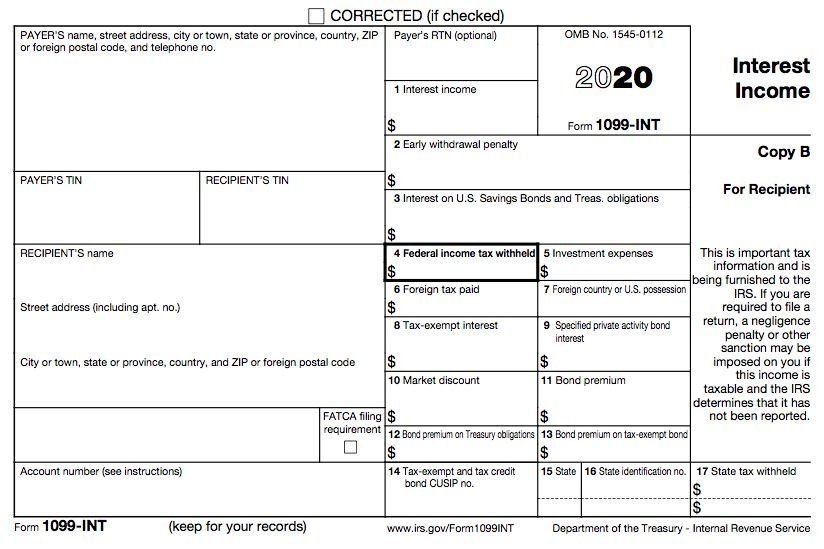
1099-INT
A 1099-INT is sent to taxpayers who earned more than $10 of interest in the tax year. Banks, brokerage firms, and other investment firms typically send out Forms 1099–INT.
1099-K
Form 1099-K is sent by payment companies, online marketplaces, or payment apps for goods or services they provide during the year. The $600 threshold for payment apps and online marketplaces to report payments on Form 1099-K was delayed for tax year 2023. The IRS has plans to adjust the threshold in upcoming tax years.
1099-DIV
A 1099-DIV is typically sent to a taxpayer if dividend income was earned during the tax year. Dividends are usually in the form of cash payments paid to investors by corporations as a reward for owning their stock or equity shares.
1099-G
Form 1099-G is sent to those who receive money from the federal, state, and local governments. Taxpayers who received a local tax refund or unemployment benefits would likely receive a 1099-G.
1099-R
A 1099-R is issued when a taxpayer receives a distribution or payout from a pension, retirement plan, or individual retirement account (IRA). Certain annuities and life insurance contracts may also issue 1099-Rs.
Not all retirement distributions are taxable, however. Consult a tax professional if you’re unsure whether you should pay taxes on a distribution.
1099-B
A 1099-B lists various transactions from a broker such as the sale of stocks, commodities, and other securities. Some types of bartering transactions executed through a barter exchange would also be listed and reported on a 1099–B form.
1099-S
Form 1099-S is issued to taxpayers for real estate transactions if they closed on a sale or an exchange during the tax year. Real estate transactions can include realizing gains or proceeds from the sale of land, commercial and industrial buildings, and residential properties such as homes or condominiums.
Tip
Proceeds realized from a real estate transaction can be exempt from taxes depending on your financial situation. Consider consulting a tax professional if you’ve sold or exchanged real estate.
1099-SA
Form 1099-SA form is sent to individual taxpayers who receive distributions from health savings, medical savings, and Medicare Advantage accounts.
1099-MISC
A 1099–MISC is typically issued for income that isn’t included on other 1099 forms. This can include money received from prizes or awards.
1099-PATR
Form 1099-PATR reports cooperative patronage dividends and dividend payments associated with farms that may have to be included in taxable income.
1099-NEC
Businesses must report some types of non-employee compensation on Form 1099–NEC. Form 1099-MISC was previously used for this purpose.
Form 1099-NEC must be filed when a business pays a non-employee $600 or more in the tax year. A non-employee might be an independent contractor or any person hired on a contract basis to complete work, such as a graphic designer, writer, or web developer. Non-employee income can also include fees, benefits, commissions, and royalties. Some payments to attorneys that exceed $600 for the tax year must be reported on a 1099-NEC.
Self-employed taxpayers who earned less than $600 might not receive a 1099–NEC but they must still report all income when filing their tax returns.
Fast Fact
Freelancers hired through a freelance marketplace such as Upwork may not receive 1099s unless the income exceeds a certain threshold. All income must be reported regardless of whether a 1099 was issued, however.
3. Dealing with Missing 1099 Forms
Record all your tax documents to ensure that you’ve received them in time to file your taxes. Contact the employer or payer to request the missing documents if you haven’t received a 1099. Taxpayers must still file their tax return by the tax filing day for that year if their 1099 doesn’t arrive in time, although they can request an extension of time to file from the IRS.
The IRS will send you a letter or bill telling you that owe taxes on the income if a company submits a 1099 form to the IRS but you don’t receive a copy for some reason so you haven’t reported that income. This letter might not arrive promptly so it’s important to remember that you’re responsible for paying the taxes you owe even if you don’t receive the form.
The taxpayer might be able to report it under miscellaneous income if they haven’t received the expected 1099 for income earned even if the business didn’t file the 1099 form.
4. Ensuring Accurate Address Information
The information will be reported to the IRS and to your state tax authority based on your Social Security number (SSN) regardless of whether the payer has your correct address. It’s important to update your address directly with payers.
Important
Taxpayers don’t have to include their 1099s when they file their tax returns but it’s a good idea to keep the forms with your tax records in case of an audit.
5. Know When the IRS Receives Your 1099s
Any Form 1099 that’s sent to you is sent to the IRS, too, often a little later. The deadline is Jan. 31 for mailing 1099s to most taxpayers but the IRS may delay that deadline in a given tax year.
Many are due to the IRS by the end of February. Some payers send them simultaneously to taxpayers and the IRS but most mail taxpayer copies by Jan. 31 and then wait a few weeks to collect all IRS copies, summarize them, and transmit them to the IRS. This is usually done electronically.
6. Immediate Steps for Reporting 1099 Errors
1. Review your 1099 forms as soon as you receive them.
2. Check for any discrepancies in the reported income.
3. Contact the payer immediately if you identify an error.
4. Request the payer to issue a corrected form before it’s sent to the IRS.
5. If already sent, ask for a corrected form to be submitted to the IRS.
6. Maintain all communication records for your reference.
Tip
Taxpayers who are unsure about the amount of income earned or how that income should be reported should seek help from a tax professional.
7. The Importance of Reporting All 1099 Income
The key to Form 1099 is computerized matching by the IRS. Every Form 1099 includes the payer’s employer identification number (EIN) and the payee’s Social Security or taxpayer identification number. The IRS matches nearly every 1099 form with the payee’s tax return.
Explain it on your tax return if you disagree with the information on the 1099 form but you can’t convince the payer you’re correct. Suppose you received a $100,000 payment from your car insurance company to cover your medical expenses and pain from a whiplash injury you suffered in an accident. Payment for personal physical injuries is excludable from income and it typically shouldn’t be reported on a Form 1099.
Try to explain it on your tax return if you can’t convince your insurance company to cancel the 1099. One possibility is to include a zero with a “see note” on line 7a, the “other income” line of a 1040 form, which is then reported on line 8 of Schedule 1.
Show something like this in the footnote:
Payment erroneously reported by XYZ Insurance on Form 1099: $100,000
Amount excludable under Section 104 for personal physical injuries: $100,000
Net to Line 7a: $0
There’s no perfect solution, but you can’t just ignore the situation because the IRS won’t.
8. The Risks of Ignoring a 1099 Form
No one wants a tax audit and several things can provoke one. The IRS will send you a computer-generated letter billing you for the tax on the interest if you forget to report the $500 interest you earned on a bank account. Pay it if it’s correct. Respond to the IRS with a letter of your own if it’s incorrect or contact a tax professional to respond to the IRS on your behalf.
9. Remembering State Tax Obligations with 1099s
Most states have an income tax and they receive the same information the IRS does. Your state will probably catch up with it if you miss a 1099 form on your federal return.
Tip
Investopedia’s Tax Savings Guide can help you maximize your tax credits, deductions, and savings. Order yours today.
10. Knowing When to Seek Tax Assistance
Taxpayers are responsible for reporting their income and filing their tax returns but there are times when you don’t know what to do about a situation. Ask for help from the IRS or a tax advisor in these situations.
The IRS suggests that you contact them if you don’t receive a 1099-R for distributions from a pension or retirement plan and contacting the payer hasn’t resolved the issue. The IRS will contact the payer or employer on your behalf.
What Is 1099 Form Used for?
The 1099 form is used to report non-employment income to the Internal Revenue Service (IRS). Businesses are typically required to issue a 1099 form to a taxpayer (other than a corporation) who has received at least $600 or more in non-employment income during the tax year. A taxpayer might receive a 1099 form if they received dividends which are cash payments paid to investors for owning a company’s stock.
Do I Have to Pay Taxes on a 1099 Form?
Income that’s been reported on a 1099 is typically taxable but many exceptions and offsets can reduce taxable income. Let’s say a taxpayer has a gain from the sale of a home because the selling price was higher than the original cost basis. The taxpayer might not owe taxes on that gain because they may qualify for an exclusion of up to $250,000 of this money depending on their tax situation.
It’s best to consult a tax professional if you’re unsure whether you have to pay taxes on your 1099 income.
Who Should Receive a 1099 Form?
Anyone who was paid $600 or more in non-employment income should typically receive a 1099 but there are many types of 1099s for various situations. There are also many exceptions to the $600 rule. You may receive a 1099 even if you were paid less than $600 in non-employment income during the tax year.
Do I Need a 1099 Form to File Taxes?
Taxpayers must report all sources of income even if they don’t receive their corresponding 1099 form. They don’t have to send their 1099 forms to the IRS when they file their taxes, however. The IRS receives its own copy of the 1099 from the issuer or payer and it includes the taxpayer’s Social Security number.
What’s the Difference Between a 1099 and a W-2?
A 1099 form shows non-employment income such as income earned by freelancers and independent contractors. Form W-2 shows the annual wages or employment income that a taxpayer earned from an employer during the tax year. A W-2 shows the taxes withheld by the employer from the employee’s salary throughout the year, unlike a 1099.
The Bottom Line
Understanding the various types of 1099 forms is crucial, as they report different kinds of non-employment income, such as interest, dividends, and real estate sales. Taxpayers must report this income on their tax returns, even if they don’t receive a 1099 form. Ensure any reported errors are promptly corrected by contacting the issuer.
While you are not required to send the 1099 to the IRS along with your tax return, the IRS receives a copy directly from the issuer. Consult a tax professional if you’re a business owner navigating the issuance of 1099s or if you have questions regarding the proper reporting of your non-employment income.
