

Unlock the Editor’s Digest for free
Roula Khalaf, Editor of the FT, selects her favourite stories in this weekly newsletter.
Growing up in a working-class area of Brooklyn, Erick Mathelier discovered tennis as a 10-year-old in the late 1980s, boarded his first plane aged 14 for a tournament in Bermuda and earned his first degree on a sports scholarship.
“Tennis helped transform my whole trajectory,” says the 46-year-old Haitian-American. “It definitely changed my life.”
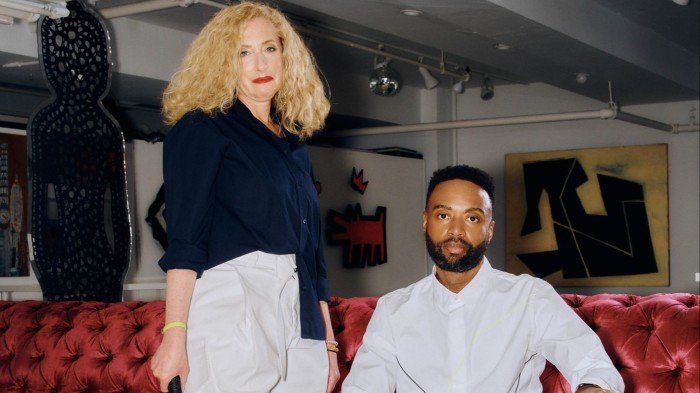
Now Mathelier and former fashion executive Michelle Spiro are building a tennis racket and clothing company they hope will ride a wave of growth in the sport, particularly among ethnic minorities.
Furi Sport is among a small group of “indie” businesses taking bold bets on a racket market long ruled by Wilson, Head, Babolat and Yonex, whose big money deals with the game’s top players are a key driver of sales.
“The industry is dominated by legacy brands stuck in the sport’s exclusive past,” Mathelier says, “creating a massive opportunity for authentic brands that serve the inclusive, dynamic community tennis has become.”
More from The Business of Tennis
The ultimate aim for Furi is to have an impact on both tennis and fashion — Spiro points to the success of brands such as Supreme and Carhartt that have built a following beyond their original markets in skateboards and construction. But they knew from the start that everything would depend on the quality of their rackets.
Enlisting a Japanese technician with decades of experience, the company spent several years developing and perfecting its first two Arma rackets, with a first limited edition run released in 2019. Since then, new versions, a more advanced racket and junior sizes have joined the line-up.
Initially self-funded and with some help from family and friends, the pair have also taken an investment from venture capital firm Andreessen Horowitz through its Talent x Opportunity Initiative, an accelerator for start-ups it believes can make cultural breakthroughs. They are targeting $50mn in annual revenues by 2030.
While the typical playbook is to sign up pros, Furi opted for a “bottom-up” marketing approach focused on urban youth players in the hope the reputation of its rackets — priced slightly below big-brand rivals and sold direct to consumers — will spread by word of mouth.


“We’re very scrappy,” says Mathelier. “The way we’ve built this company is not the most traditional way.” The start-up sponsors young players — typically aged 12 to 20 — and participates in non-profit youth tennis programmes.
“Our strategy is to really take over those juniors and get into the people who either want to go to college with tennis or ultimately become pros,” says Spiro. “We believe it will be easier to get on pro players with our apparel because it’s not changing their instrument.”
Furi’s first clothing offerings, though drawing on tennis heritage, were streetwear but a performance line designed for a range of body shapes will follow this summer. Citing a report this year from the US Tennis Association, Spiro says rising participation rates are “being driven by diverse communities . . . and when you think about those diverse communities, they all need different fits”.
Diadem, another largely direct-to-consumer brand founded in 2015, initially focused on strings before launching its first Nova and Elevate rackets later that decade.
Having started by sponsoring players ranked in the high hundreds, it signed 10 last year with global rankings between 200 and 500 and offered $50,000 to the one that achieved the highest rank by the end of the season.
Christian Singer, an industry veteran who now runs the company’s European business, says the scheme was one example of how Diadem “tries to be a little bit different, creative, versus just throwing money at a player”.
FT Scoreboard

Scoreboard is the FT’s weekly briefing on the business of sport. Sign up at ft.com/scoreboard
“The big brands are sometimes a little bit jealous of small brands,” he says. “We’re very flexible . . . if we have an idea, we’ll do it. If it works, we’ll do it again. If it doesn’t work, we stop doing it. Big companies just don’t operate that way — there are approval processes.”
A breakthrough in visibility came this year after signing Ukraine’s Elina Svitolina, whose path to the quarter-finals of the Australian and French Opens using a Diadem racket drew a rush of interest from top-100 players. “Six months ago we weren’t even getting access to them and all of a sudden it’s the other way around,” Singer says.
US-based Solinco also started with strings and spent 15 years building a broader equipment line-up before launching its rackets three years ago.
Its strings — which co-founder KT Kim says have been used out of choice by many top-10 pros — gave the company credibility, relationships with players and distribution channels.
Solinco’s racket plans gained momentum in 2018 when it hired a “world-class” engineer who had been head of research and development at one of the incumbents. Its Whiteout and Blackout rackets debuted in 2022. But that was only part of the challenge, Kim says, with the company now needing to raise awareness of the product before convincing people to try it or switch to it.
With the signing of a top pro too costly and risky, the business believed it would be more effective to pursue a grassroots strategy focused on junior, academy and college players. “The tennis world is actually quite small,” Kim says. “If your product is good, people will hear about it, and people will get interested, and eventually it filters up — even to the professional levels.”
“We’ve planted a lot of seeds” with junior players, he says, “and hopefully a lot of those seeds will bloom.”
