

Unlock the Editor’s Digest for free
Roula Khalaf, Editor of the FT, selects her favourite stories in this weekly newsletter.
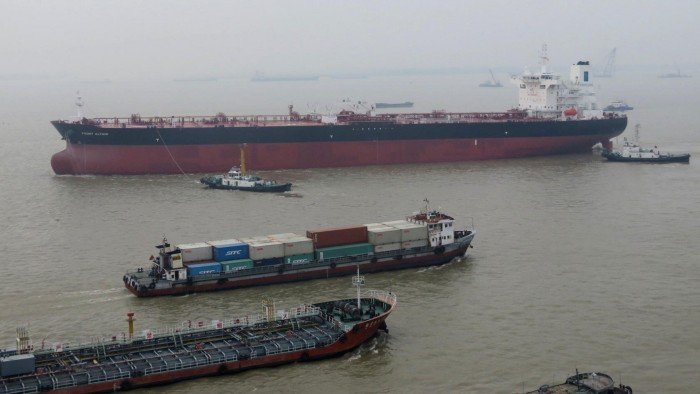
The world’s largest publicly listed oil tanker company is refusing new contracts to sail into the Gulf through the Strait of Hormuz following Israel’s attack on Iran, its chief executive has said.
The decision by Lars Barstad of Frontline is an early sign of the widespread disruption to global shipping patterns expected as a result of the outbreak of conflict early on Friday.
The concerns are focused on movements through the Hormuz Strait, the narrow stretch of water between Iran and Oman that links the Gulf and the Arabian Sea.
About a quarter of global oil supplies and a third of liquefied natural gas production move through the strait. It is also an important conduit for container ships going to and from the important regional hub at Jebel Ali in Dubai.
Barstad said that “extremely few” owners, including Frontline, were accepting charters to enter the region.
“We’re not contracting to go into the Gulf,” Barstad said. “That’s not happening now.”

Other maritime security experts agreed shipowners were reluctant to use the vulnerable waterway.
Barstad added that the company had multiple vessels already in the Gulf that would sail out through Hormuz, with tightened security and in convoys with international naval escorts.
But he said: “Trade is going to become more inefficient and, of course, security has a price.”
Iran could cause significant disruption to shipping sailing through the strait. Tehran could also encourage Yemen’s Houthis, whom it backs, to step up attacks on international shipping using the Red Sea.
In April 2024, Iran’s Revolutionary Guards seized the MSC Aries, a container ship controlled by Israel’s Ofer family, near the Strait of Hormuz and forced the crew to sail it into Iranian waters.
Houthi attacks, starting in late 2023, have forced many large shipping companies to avoid the normal Asia to Europe route via the Suez Canal and instead sail round the Cape of Good Hope.
Insurance brokers on Friday said that rates on cargoes shipped through the Red Sea had jumped 20 per cent.
The sharp rise in the cost of cover against drone and missile strikes, piracy and related perils in the Red Sea reflected an increased threat of attacks on commercial vessels by Houthi rebels, said a broker familiar with the market. Israel earlier this week struck targets in the port city of Hodeidah, in Houthi-controlled Yemen.
Peter Sand, chief analyst at supply chain information company Xeneta, said the growing conflict made it less likely container ships would make a large-scale return to their normal route.
Container shipping companies — which transport mostly manufactured goods — have been particularly reluctant to sail through the Red Sea.
Sand added that there would be “inevitable disruption and port congestion” if shipping lines decided to stop using Jebel Ali as a hub and started using less well-equipped ports outside the Gulf.
Iran might impose a “de facto closure” of the Strait of Hormuz, Sand said.
However, Barstad did not believe that Iran would shut the waterway entirely due to the country’s reliance on oil revenues. “They have no interest in disrupting their own piggy bank,” Barstad said.
Iran might, however, have trouble producing its normal oil volumes following the attack, he added. That might force oil importers dependent on Iran — such as China — to look elsewhere for supplies, to the benefit of mainstream tanker operators such as Frontline.
To avoid international sanctions, Iran’s exports move on a “dark fleet” of ships not compliant with international shipping rules. However, the buyers would need to source crude from compliant sources transported on compliant ships, Barstad said.
Frontline’s shares were up 3.5 per cent in early-afternoon trading in New York.
