


Since 2012, Fynd has evolved from bridging online-offline retail into a full retail-tech ecosystem, powering omnichannel commerce, AI-enabled operations, and seamless in-store and online experiences.
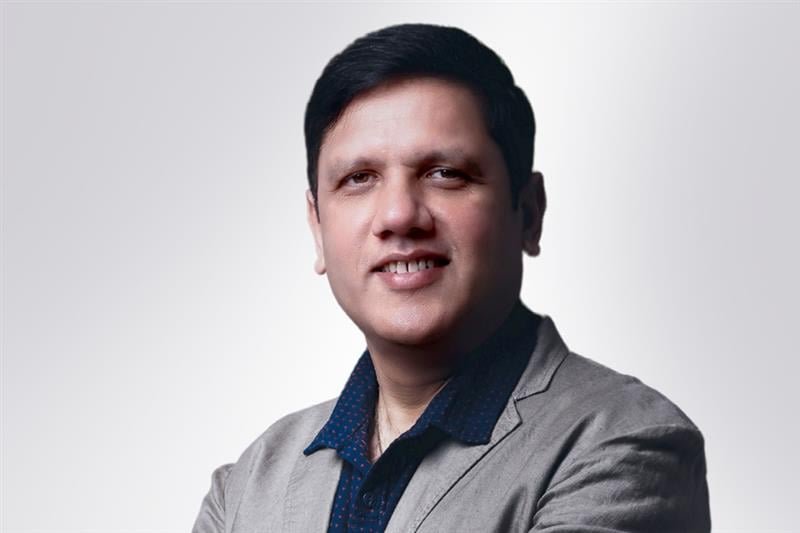
With operations spanning India and a growing presence in the UAE, MD Dharmendra Mehta is leading Fynd through rapid innovation and expansion, steering the company towards global relevance in a tech-driven retail era.
Here, he speaks to us
Tell me about the company and the driving force behind it.
Fynd was founded in 2012 by three IIT Mumbai graduates: Farooq Adam, Harsh SHah and Sreeraman Mohan Girija, who wanted to build something in the e-commerce stack. They identified that most companies were building either e-commerce (one warehouse shipping to customers) or retail tech (in-store point of sale systems). Fynd’s founders decided to combine these approaches into unified commerce with a modular structure, allowing clients to use specific components or the entire platform.
By 2015-16, they began incorporating AI, and today they’ve evolved into an “autonomous commerce” platform using AI at every stage, including for coding.
The platform now enables AI for various commerce segments, from customer support chatbots to AI-designed fashion items and marketing campaigns.
As for myself, I have over 25 years of experience, primarily in the fashion space in India with companies like Raymond, Future Group, and Flipkart. I’ve been in the region for eight-nine years, previously serving as CEO for Mumzworld, CureFit, and heading e-commerce for Lal’s Group before joining Fynd to help with community building and market expansion.
In India, we have over 1,000 employees, with about 98 per cent of them being engineers. For global expansion, we have about 100 engineers and product managers working on localisation efforts. We have a leadership team on the ground in Dubai, with a larger team that travels as needed.
We serve over 20,000 stores and more than 300 enterprise retailers globally.
The company is also backed by Reliance Retail Ventures.
What makes Fynd’s offerings unique in the market?
Unlike companies that solve one problem in depth, Fynd has solved multiple problems in depth and combined them into a platform. We offer 15 different products that retailers can take individually, as bundles, or as a complete tech stack.
Our platform is now AI-native, or what we call “autonomous commerce”, using AI throughout the development process. We’ve compressed the fashion lifecycle from 12-18 months to just three months by enabling AI-driven design, manufacturing, and marketing.
Why did you choose Dubai for your expansion?
We chose Dubai for three main reasons: First, the government’s focus on building a digital economy, with aims to make 20 per cent of GDP come from digital sectors.
Second, the ease of doing business and transparency from the government.
Third, the UAE’s AI charter, with a Minister for AI in place driving its vision and 2031 blueprint for AI transformation. These align with our values of being at the bleeding edge of AI development.
In addition, Dubai also serves as a gateway to other markets.
Where are you seeing interest for your services in Dubai, and are you targeting large enterprises or SMEs?
Initial interest has come from enterprises, particularly in fashion and luxury fashion. Hugo Boss is already live with their website built on the Fynd platform. We’re also working with luxury retail watches companies, electronics retailers, and grocery chains.
We’ve found traction across multiple categories in the last six months after spending the first quarter setting up infrastructure and licenses.
What challenges have you faced as a business, and how have you overcome them?
A major challenge is that companies in the region have already invested in various technology solutions over the last decade, creating a mishmash of systems they’re reluctant to replace.
Our solution is keeping our approach modular — we don’t ask clients to replace all their existing technology, but instead help them achieve their five-year vision by addressing specific pain points. We take a consultative approach, meeting with leadership across roles to understand their problems and show how we can help solve them.
Localisation is another challenge — we’ve learned to adapt to different markets like Kuwait, Bahrain, Saudi Arabia, and the UAE, including Arabic transliteration with 98 per cent accuracy and reactive UI/UX that shifts from left-to-right to right-to-left as needed.
What are your plans for the rest of the region, and when will we see that rollout?
We’re just starting in the UAE with a focus on gaining a large market share. Over the next six months, we’ll focus on Saudi Arabia, with 2026 dedicated to establishing a presence there, getting partnerships in place, and eventually building a strong presence there over the next 12 months.
We’re treating GCC markets as two distinct segments: Saudi Arabia and Oman (larger populations with different behaviors) versus UAE, Kuwait, Bahrain, and Qatar (smaller economies where luxury retail and quick commerce are taking off).
We also have industry-agnostic products like supply chain tools that we’ll take to Saudi Arabia.
