

Unlock the Editor’s Digest for free
Roula Khalaf, Editor of the FT, selects her favourite stories in this weekly newsletter.
Eastern Baltic cod have evolved to be smaller and slip through nets, according to landmark research that links overfishing to changes in marine species’ DNA.
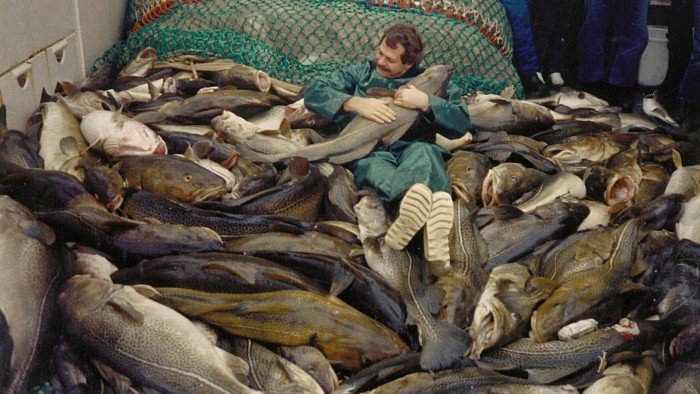
Cod that would once have dwarfed a dinner plate now easily fit on one because faster-growing specimens commonly caught for food have largely disappeared, scientists have found.
The evolutionary shifts driven by human overexploitation risk undermining some fish populations beyond repair, according to researchers, who looked at almost a quarter of a century of fish DNA.
“For the first time in a fully marine species, we have provided evidence of evolutionary changes in the genomes of a fish population subjected to intense exploitation, which has pushed the population to the brink of collapse,” said Kwi Young Han, lead author of the research published in the journal Science Advances on Wednesday.
Just over a third of the world’s marine fish commonly caught for human consumption are considered overfished, according to the UN’s Food and Agriculture Organization. The median mature length of eastern Baltic cod has halved from 40cm to about 20cm since the 1990s, according to research published last year.

Fishing for eastern Baltic cod has been banned by the EU since 2019, after a steep fall in the species’ population.
Han and her fellow researchers genetically and chemically analysed tiny ear stones in 152 cod caught from 1996 to 2019 in the Bornholm basin between Sweden and Poland. Faster-growing specimens almost disappeared, while fish that grew slowly but reached reproductive maturity at a smaller size predominated.
The researchers found evidence of so-called directional selection in the evolution of genetic variants associated with body growth. This meant that the slower-growing fish became gradually more common and the faster-growing specimens less so.
The authors of the study had “broken new ground” in linking shrinking fish sizes to “genes that are important for fish growth and reproduction”, said Malin Pinsky, a marine biologist who has studied Atlantic cod.
While fish had evolved to survive, the genomic changes created many problems, Pinsky said. Smaller fish produce fewer offspring, while the genetic narrowing of the species harms its potential to adapt to environmental changes. Smaller fish were more vulnerable to predators and climate change, he said.
“We’re concerned about these populations and other ones like them collapsing or even going extinct.”
Comparable evolutionary shifts have appeared in species including Atlantic salmon and have likely impacted other heavily exploited marine fish, such as anchovies, herring and tuna, said Han, who did the research at Geomar Helmholtz Centre for Ocean Research Kiel in Germany.
The study provided important genetic evidence of the evolutionary selection pressures exerted by fishing, said Rick Stafford, professor of marine biology at Bournemouth University.
“Cod can live more than 30 years, but with current fishing levels, it is rare to find cod over five years old,” Stafford said.
