

A host of Australia’s biggest industrial names are appealing for government aid as high energy prices threaten to force them out of business, in a test for Prime Minister Anthony Albanese’s new Labor government and its relations with business.
Some Australian metals smelters have hit a crisis point over the past year, due to high power bills and volatile commodity prices, with thousands of workers’ jobs at risk.
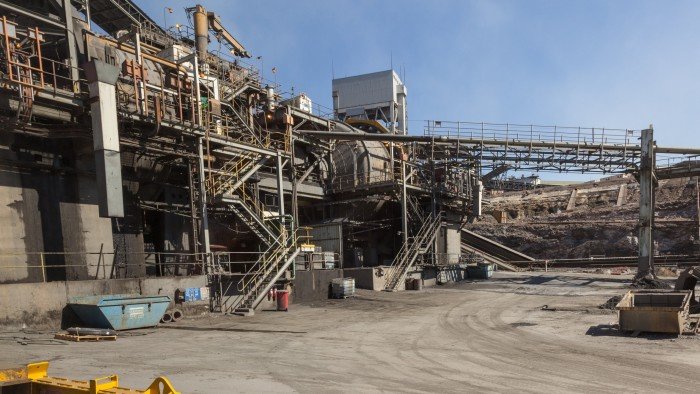
The latest alarm has been sounded by UK-listed miner Glencore, which has operations in Mount Isa, a historic mining town in Queensland. “A combination of unprecedented smelting market conditions, high costs like energy, gas and labour, and a shortage of copper concentrates is currently making the Mount Isa copper smelter unviable,” Glencore said in a statement on Friday.
Australia’s industry minister Tim Ayres visited the town the same day for talks with Glencore on its requests for state and federal aid and warned: “Any closure of the Mount Isa copper smelter would have a detrimental impact on Australia’s sovereign capability and other facilities downstream that rely on the smelter.”
Meanwhile, the miner Rio Tinto is the largest shareholder in the Tomago aluminium smelter in New South Wales, which uses about 10 per cent of the state’s electricity.
It faces an uncertain future due to surging power costs and the slow pace of the energy transition. The New South Wales Labor government is in talks to intervene, after reports that it could take billions of dollars of public money to bail out the smelter.
Rio has also warned of “material uncertainty” over the future of a hydro-powered aluminium smelter in Tasmania, while a nearby manganese facility owned by Sanjeev Gupta’s GFG Alliance has been seeking a bailout.
In addition, commodities trader Trafigura has said governments should consider nationalising smelters that are struggling to compete with China, after putting its South Australian zinc smelter under review.
One mining company director said the government had an important decision to make on how to support the country’s struggling processing industry, given its agenda to turn Australia into a critical minerals superpower and boost the country’s sovereign capability. “That dream could be dead before it’s begun,” he said.
Albanese’s government has made a manufacturing revival a hallmark of industrial policy for Labor’s second term, while championing the energy transition from coal-fired power to renewable sources. It is now being asked by some of the country’s largest energy users to bridge the gap on production costs during that changeover.
Labor also faces tough decisions over whether to allow foreign buyers to acquire strategically important companies in the energy and defence sectors.
The fate of Tomago is the most symbolic for Albanese. He visited the facility — which sits in the former coal mining heartland of the Hunter Valley and is a bulwark of the local economy — during the election campaign to promote a plan to provide production credits for smelters to switch to renewable energy.
Saul Eslake, an economist with Corinna Economic Advisory, said it was no surprise that large companies seeking a bailout had appealed on national security grounds and played to Labor’s view that the manufacturing sector is “more noble” than other parts of the economy.
“The Labor party under Albanese is particularly prone to manufacturing fetishism,” he said.
Eslake added that bailing out unviable smelters and preserving jobs could be counter-productive to the government’s wider push to improve productivity, given the sector’s weak performance compared with international rivals.
The Labor party’s relationship with the business sector turned fractious during Albanese’s first term when changes to industrial relations laws angered the country’s powerful mining sector and delighted unions.
But Labor’s landslide victory in May’s general election has handed Albanese a huge mandate to implement potentially sweeping economic reforms. The prime minister has called a summit in August to build consensus among business leaders, unions and politicians over measures to boost productivity and investment, and has stepped up his pro-business rhetoric.
“It’s the private sector that drives an economy. What the public sector should do is facilitate private sector activity and private sector investment,” he said in a speech in Canberra last week.
One of Labor’s first moves in its second term has been to give provisional approval for a 45-year extension of a contentious gas project operated by Woodside Energy on the Burrup peninsula in Western Australia, after years of scrutiny.
That provoked fury from environmental and indigenous activists but was welcomed by some in the business community as a sign that Labor’s second term would be more decisive.
Steve Knott, chief executive of the Australian Resources & Energy Employer Association trade body, said industry would view the approval as a “welcome and long overdue step toward sensibly dealing with red and green tape” that had stalled and frustrated gas and mining projects. “Certainty and stability must be returned to the sector after a discernible decline in investor conditions and confidence,” he said.
Danielle Wood, chair of the Productivity Commission, which is advising the government over potential reforms across a number of policy areas, said that measures would have to be designed in a revenue-neutral way, given the pressure on Australia’s budget to support businesses in tackling the country’s economic stagnation.
“The consensus is that there needs to be a stripping back of red and green tape — this is a genuine problem in housing. Ditto on green energy,” she said of how layers of regulation had stifled confidence over the years.
The Business Council of Australia has also called on the government to emulate the UK by adopting a national research and development strategy centred on tax incentives to boost flagging investment levels. Otherwise, “investment opportunities will go overseas, and we will fall further behind”, said Bran Black, chief executive of the BCA.
Yet Innes Willox, head of the Australian Industry Group, said that many businesses still had “mixed emotions” about Labor after its first term and had a “once bitten, twice shy” attitude. He said Albanese would need to convince business leaders that his government’s vision of productivity reform was the same as theirs.
“Our economy is going to go backwards at a rate of knots unless you start energising private sector investment,” he said.
