

Unlock the Editor’s Digest for free
Roula Khalaf, Editor of the FT, selects her favourite stories in this weekly newsletter.
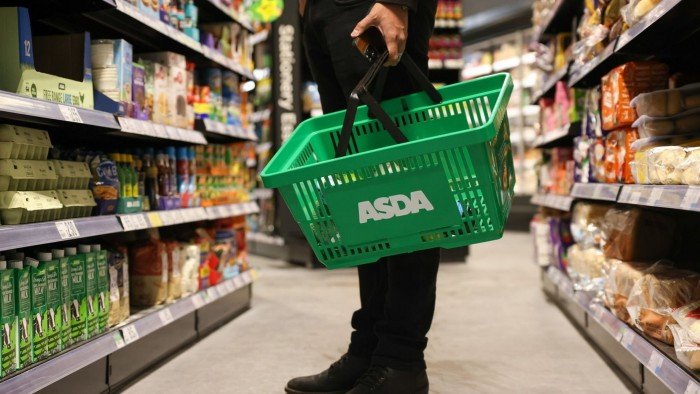
Shares of UK supermarkets fell on Tuesday after Asda, the country’s third-largest grocery chain, cut prices on nearly 1,000 products, signalling stiffer price competition ahead of the crucial Christmas trading period.
Tesco and J Sainsbury, the country’s two biggest supermarket groups, fell as much as 4.3 per cent and 3.1 per cent respectively after privately owned Asda said it would reduce prices on grocery products ranging from pasta and cooking sauces to tea, coffee and gravy granules. The shares partially recovered to trade about 1 per cent lower on Tuesday afternoon.
Asda, which signalled in March that it would take a material hit to profits in a bid to win back shoppers, said it was reducing prices on 956 products by an average of 6 per cent.
The cuts come as the sector grapples with rising costs, including increases in the minimum wage and national insurance, potentially squeezing profit margins.
Chancellor Rachel Reeves is poised to remove retailers from the top band of business rates after intense pressure from supermarkets and warnings over the effect of food price inflation, the Financial Times reported last week.
Kien Tan, a senior retail adviser at consultancy PwC, said price reductions were “part of the cut and thrust of competition in one of the most competitive grocery markets in the world”.
Monique Pollard, an analyst at Citigroup, said: “Earlier in the year people were thinking: could this evolve into a price war? And so far I would say it hasn’t, but it’s still a competitive and challenging environment.”
Asda, owned by private equity group TDR, has lost market share in recent years as cost-sensitive shoppers have hunted for bargains in the face of inflation.
Food price growth hit 5.1 per cent last month on the back of rising commodity prices, which have particularly affected beef, chocolate and dairy produce.
Inflation means shoppers’ baskets will still “be more expensive than last year”, said Tan. “There may be price cuts in some areas, but there will be price increases in others.”
Asda, which last November appointed retail veteran Allan Leighton as executive chair to lead a turnaround, has struggled with the implementation of a new IT system that has contributed to poor stock availability.
Its ability to respond to shifting consumer trends has also been constrained by a £6.8bn leveraged buyout in 2020 by TDR and the billionaire Issa brothers, which loaded the company with debt.
“We understand the pressure families are under from rising living costs and we’re stepping up our support as we enter an expensive time of year for our customers,” said Rachel Eyre, chief customer officer at Asda.
Separately on Tuesday, discount retailer B&M said it would focus on prices as part of a turnaround plan for its UK business.
The group warned that adjusted earnings before interest, tax, depreciation and amortisation, would be about £198mn for the half year to September 27, down from £274mn in the same period a year earlier.
It added that it would be hit by higher wage costs following the increase in national insurance contributions and minimum wage rates, which came into force in April, as well as an incoming scheme that will require retailers to cover more of the costs for disposal of packaging. Shares fell as much as 14 per cent before recovering to trade 8 per cent lower on Tuesday afternoon.
