

Unlock the White House Watch newsletter for free
Your guide to what Trump’s second term means for Washington, business and the world
Companies across the world are reshaping their US investment plans and reconfiguring their supply chains, as they deal with the impact of Donald Trump’s campaign to shake up the global trading order.
Since returning to the White House this year, the US president has announced an array of new tariffs on almost all global trading partners, ratcheting up tensions between Washington and foreign capitals.
The moves have pushed the US tariffs on foreign goods to the highest levels since before the second world war, boosting the country’s tariff level in effect to more than 17 per cent.
“We are witnessing a fundamental redrawing of the rules of global trade,” says Adrian Grey, global chief investment officer of Insight Investment, a UK fund manager.
But for companies planning to invest in or trade with the US, the president’s rapidly changing tariff rates pose significant planning challenges.
The first nine months of Trump’s return to the White House have been marked by a series of threats and reversals. Foreign leaders have rushed to limit the potential damage of a global trade war by trying to appease the US president.
But Trump has shown he is willing to tear up existing trade deals on which companies have based their investment decisions and supply chain planning.
Earlier this year, the US president applied steep tariffs to Canada and Mexico, two of the US’s biggest trading partners, despite a 2020 trade deal that Trump himself had signed with the countries.

Last month, Trump abruptly halted US talks with Canada aimed at lowering the extra tariffs the US had imposed on its goods.
William Reinsch, chair in international business at the Center for Strategic and International Studies in Washington, says Trump’s cancellation of the talks “increased confusion”.
“It promotes uncertainty in the relationship, which is bad for trade, bad for investment, bad for companies on both sides of the border, because they don’t know what’s going to happen next,” he adds.
The outcome of a pending Supreme Court case set to rule on the legality of Trump’s use of emergency powers to impose the bulk of his recent tariffs adds to great uncertainty facing businesses.
The ruling is expected before the end of the year. If it decides that Trump cannot use the powers — known as the International Emergency Economic Powers Act — to impose the tariffs, the US president will need to fall back on other legal methods to hit countries with the levies.
The outcome of the case will not affect the raft of sector-specific tariffs Trump has imposed using national security laws.
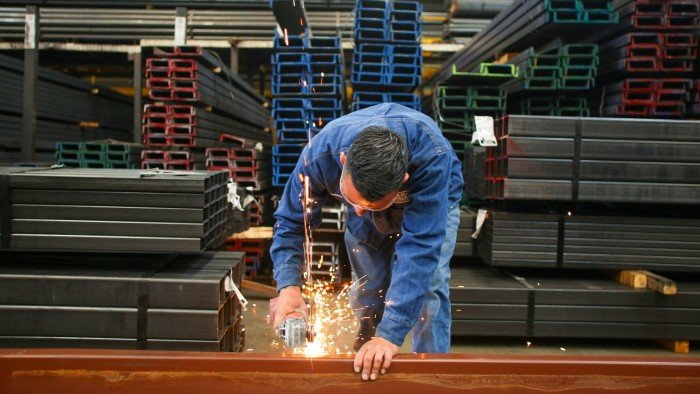
These include tariffs of up to 25 per cent on imports of autos and their parts to the US, levies of 50 per cent on a range of steel, aluminium and copper goods, 10 per cent on timber and lumber, and 25 per cent on kitchen cabinets and furniture.

The tariffs have already affected large companies across the auto and clothing industries, with many reporting how much the levies will cost them.
Automakers operating in the US, whose supply chains span the North American continent, have been particularly badly hit. Ford, Stellantis and GM all expect the impact to run into billions of dollars, although Ford and GM have lowered their initial estimates of the size of the impact.
Nike, the sportswear maker, warned in September that Trump’s tariffs would cost it $1.5bn over 2025. More than half the company’s footwear and a third of its clothing is made by factories in Vietnam. The US has applied a 20 per cent tariff to all imports from the south-east Asian country. On an earnings call in June, Nike chief financial officer Matthew Friend said that tariffs were “a new and meaningful cost headwind”.
Trump has made clear that companies investing in the US can avoid the new levies, striking a string of piecemeal deals with individual corporations that offer them protection from future duties in exchange for big investment pledges.
In August, Trump threatened to impose tariffs of 100 per cent on chips, but also said companies such as US tech group Apple could avoid them by investing in the US.
Trump announced the carve-out during an Oval Office meeting with Apple chief executive Tim Cook, who said the company would raise its planned investments in the US over the next few years by $100bn.
In September, Trump said the US would impose 100 per cent tariffs on imports of branded or patented drugs, unless the manufacturer is building a plant in the country.
In response, leading pharmaceutical companies have struck deals with the White House, promising to boost US production and to lower drug prices for Americans.
Drugmaker Pfizer announced at the end of September that it would cut the prices of its products in the US, and received a three-year reprieve from the tariffs — as long as it also invested in the US.
AstraZeneca, the Anglo-Swedish drugmaker, struck a similar deal weeks later. Just months before the deal was formally announced, the company promised to invest $50bn in US manufacturing by 2030.
