

Unlock the Editor’s Digest for free
Roula Khalaf, Editor of the FT, selects her favourite stories in this weekly newsletter.
Good morning. Marc Rowan of Apollo says that Europe is “at war with itself” over financial regulation. He’s quite right: the EU countries need to overcome their differences and embrace the sort of reforms Mario Draghi and Enrico Letta have suggested, and fast. Any chance? Email us your thoughts: unhedged@ft.com
Luxury
LVMH, the largest, and by acclaim, the best-run of the big European luxury houses, had a good week last week. From the FT:
LVMH shares surged 13 per cent . . . as investors hailed the group’s return to growth in the third quarter and bet that the industry was through the worst of a multiyear downturn . . . revenues rose 1 per cent on an organic basis to €18.3bn in the period, snapping two quarters of decline
To get a sense of the industry’s downturn, have a look at revenue growth rates over the past 10 years. The wild post-pandemic bauble buying spree proved impossible to maintain, not just at LVMH but at Hermes, Richemont, Kering and Moncler. Sales have been decelerating for four years:

As a result, over the past five years, only LVMH and Hermes have beat the European stock indices. And over the past three, even shares in those two have been flat:

My colleague Elizabeth Paton, the FT’s fashion editor, is not convinced that the LVMH results are evidence that the sector has shaken off its troubles. From her Fashion Matters newsletter (sign up for it here):
“The worst is over!” I hear you cry! Well, kind of…
LVMH is . . . the biggest, richest and most powerful group in the business, throwing everything possible in its grasp at turning the ship around. If [1 per cent growth] is the best that the best can achieve, with unlimited resources and top talent, who is to say the rest of the pack can all do as well as it has?
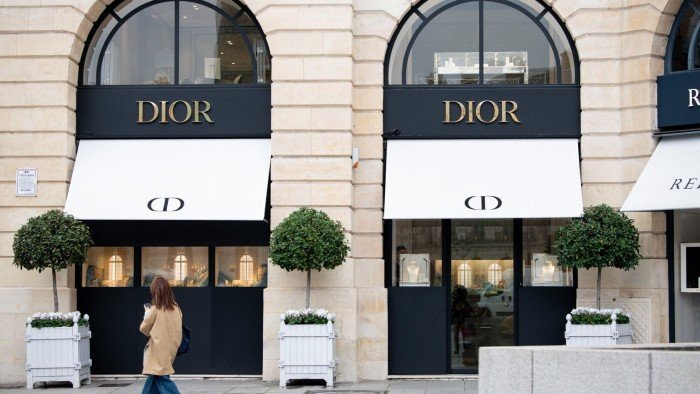
. . . The sector has priced itself up to levels from which it will be very hard to back down . . . There are still many consumers who don’t care about fashion the way they did, and the product from big name new hires like Jonathan Anderson at Dior won’t trickle into stores for some time yet . . . we are not out of these woods just yet.
The point about price is crucial. For several years, luxury industry experts have been saying that producers need to focus their attention squarely on the very small percentage of customers who generate a very large percentage of industry revenue. This means pushing super-duper premium goods priced as high as possible to capture as many dollars as they can from utterly price-insensitive customers, while treating the “aspirational” customer who has to reach for something special as a brand-tainting threat.
That’s classic management consultant/activist investor advice, but like a lot of the classics of that genre, it may be a poor long-term strategy. To understand why, read a recent column by another colleague, Jo Ellison of HTSI. Aspirational purchases create brand loyalty among young consumers, and the tippy-top end customer can be fickle. Ellison writes that:
. . . not all of luxury is suffering: in the wake of the pricing vacuum a number of smaller independent brands have emerged [and] boasting healthy growth. The secret to their success has been the dazzling revelation that most people don’t have infinite bank accounts.
Investors face a wider question. One of the reasons to own the big luxury houses is to play the “K-shaped” economy of many developed countries. The share of wealth in the hands of the very rich is high and rising. It is possible to deplore this trend as a citizen and want exposure to it as an investor. So how best to get it? There is one very simple and general answer to this question: just own financial assets of any sort, preferably ones that contain some kind of hedge against inflation. The rich don’t tend to consume any incremental new wealth they accumulate, because they already have all the stuff they need. They tend to invest their next dollar instead, pumping money into financial markets, pushing up their value (this is the “savings glut of the rich”).
But what if one wants more leveraged exposure to the rich-get-richer trade? Are luxury houses the right trade for that? I’m not sure. The luxury groups do sell to the very rich, and they have some of the best and most enduring brands in the world — and a strong brand is an incredibly powerful thing. But a brand has to be attached to the right business model to make a great investment (look at the long-term stock chart of Mercedes if you want to see what a great brand attached to a bad business model looks like).
Luxury brands have to carefully navigate both pricing and styling. The latter is especially tricky to manage. Might a better long-term rich-get-richer trade be to own Wall Street banks like Morgan Stanley or Goldman Sachs? They also have great brands and exposure to wealth concentration, but don’t have to worry about the latest trends in frocks or jewellery. Alternately, might not consumer brands that are glossy, but one step down from luxury, be a steadier play on the K-shaped world? I think of the kitchen retailer Williams Sonoma, where you can signal your arrival by dropping $500 on a copper risotto pot or a Japanese chef’s knife. The rich’s appetite for fancy kitchen stuff is bottomless and unchanging, and Williams Sonoma earns a staggering return on equity of about 50 per cent.
I’m curious to hear readers’ thoughts.
One good read
FT Unhedged podcast

Can’t get enough of Unhedged? Listen to our new podcast, for a 15-minute dive into the latest markets news and financial headlines, twice a week. Catch up on past editions of the newsletter here.
