

:max_bytes(150000):strip_icc():format(jpeg)/GettyImages-1616692666-3f6a540fc72a412e84f817f886a3dd95.jpg)
In finance, the largest banks wield enormous influence, not just in their home countries but across the globe. These financial behemoths serve a diverse clientele, from everyday savers to multinational corporations, and their reach extends far beyond traditional banking services.
Banking has undergone a dramatic transformation in recent decades. Today’s top banks are complex institutions that blur the lines between commercial and investment banking. They not only hold deposits and make loans but also underwrite stock offerings, provide brokerage services, and advise on high-stakes mergers and acquisitions.
Market capitalization is a revealing measure of the true titans of banking. This figure, calculated by multiplying a company’s stock price by its number of outstanding shares, reflects the market’s assessment of a bank’s overall value. The number encapsulates not just a company’s present performance but future potential as well.
Key Takeaways
- The sheer size of these top 10 banks underscores their systemic importance to the global economy. Their health and stability have ripple effects far beyond the financial sector.
- The five largest banks by market capitalization are JPMorgan Chase, Bank of America, Industrial and Commercial Bank of China, Agricultural Bank of China, and Wells Fargo.
- The list includes banks from various countries, including the U.S., China, Canada, and Australia, reflecting the global nature of the banking industry and the importance of international financial centers.
- The presence of multiple Chinese banks in this top 10 list is a stark reminder of China’s growing economic clout.
Our list of the top 10 banks by market cap reveals a mix of American financial powerhouses and international giants, particularly from China. While focused on publicly traded companies listed in the U.S. or Canada, including those traded via American depositary receipts (ADRs), this ranking provides a snapshot of global banking dominance. We have used each bank’s information based on trading in their home exchanges (when needed, we have put all figures in U.S. dollars; unless noted otherwise, data is current).
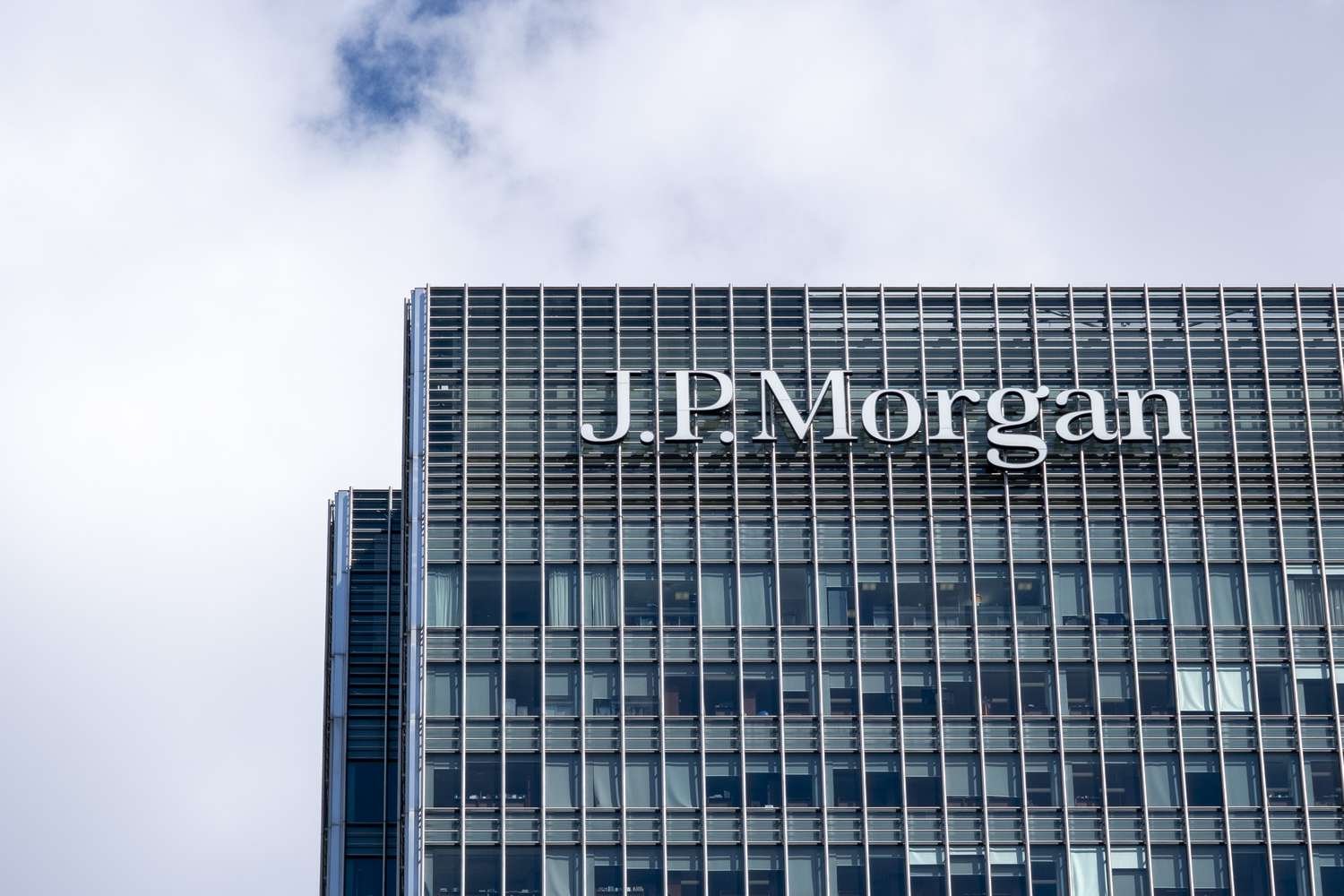
JPMorgan stands atop the banking world with a market capitalization of over $825 billion, more than double its closest competitor. This financial giant, based in New York City, offers services that span consumer banking, commercial banking, investment banking, and asset management. Under the leadership of CEO Jamie Dimon, JPMorgan has consistently delivered strong financial performance, even in challenging economic environments.
The bank’s vast scale allows it to invest heavily in technology, giving it a leg up in digital banking trends. However, like all major banks, JPMorgan Chase faces ongoing challenges, including regulatory scrutiny, cybersecurity threats, and the need to adapt to rapidly changing consumer preferences in financial services.
With a market capitalization of about $375 billion, Bank of America holds the second spot among the world’s largest banks. The Charlotte, North Carolina-based institution serves a diverse client base, from individual consumers to large corporations and institutional investors. Under CEO Brian Moynihan, Bank of America has focused on streamlining operations while expanding its digital banking capabilities.
Like its peers, Bank of America faces ongoing challenges in navigating complex regulations and adapting to evolving customer expectations in an increasingly digital financial landscape. During 2023, it had $ 2.54 trillion in assets, of which $2.40 trillion were held in the U.S.
As of 2025, Industrial and Commercial Bank Of China is the largest bank in the world in terms of total assets under management. As China’s largest lender, ICBC has a central part in the country’s financial system and economic development. The bank offers a wide range of services, including corporate and personal banking, asset management, and treasury operations.
ICBC’s vast domestic branch network and growing international presence have helped fuel its expansion. However, the bank faces challenges unique to the Chinese market, including government influence on lending practices and concerns about nonperforming loans in certain sectors.
Agricultural Bank of China ranks among the world’s largest banks, with a market capitalization of over $335 billion. One of China’s “Big Four” state-owned banks, it’s long supported the country’s rural development and agricultural sector. However, ACGBY has since diversified its operations to include a full range of commercial and investment banking services.
The bank’s extensive rural branch network gives it a unique position in China’s financial landscape but also presents challenges regarding efficiency and nonperforming loans. The bank’s future growth may depend on balancing its traditional rural focus with expansion in more lucrative urban markets and digital banking services.
With a market capitalization of just over $260 billion, Wells Fargo has a storied history dating back to the California Gold Rush. In the last decade, it has faced significant challenges. Once known for its strong customer relationships and cross-selling prowess, Wells Fargo has been working to rebuild its reputation following a major account fraud scandal revealed in 2016. Under new leadership, the bank has undergone extensive restructuring, put in place enhanced its risk management practices, and invested heavily in regulatory compliance.
Wells Fargo recently sold off several divisions to concentrate on more lucrative areas of business. In 2023 alone, the bank let go of its Wells Fargo Asset Management, its Corporate Trust Services business, and its student loan portfolio, among lines of business. It also stopped originating personal lines of credit. The bank has shown signs of financial improvement, reporting increased profits and revenue in recent quarters. Despite progress, Wells Fargo continues to face regulatory scrutiny and fines. In September 2024, for example, a court ruling allowed a shareholder lawsuit to proceed, alleging that the bank’s board failed to properly oversee discriminatory lending practices.
Bank of China Ltd. (BACHY)
As the oldest bank in mainland China, BACHY has a rich history dating back to 1912. The bank has long managed China’s foreign exchange operations and international trade settlement, among other services. It is now a state-owned commercial bank offering corporate, personal, and investment banking services.
Considered the most internationally oriented of China’s state-owned banks, it’s central in China’s cross-border trade and investment activities, with a significant presence in major financial centers worldwide. The bank has actively supported China’s Belt and Road Initiative, expanding its reach across Asia, Europe, and Africa.
As another of China’s “Big Four” state-owned banks, CICHY focused initially on funding large-scale infrastructure projects. The bank has since diversified its operations to offer a full range of commercial and investment banking services. It also has a strong presence in China’s urban centers and has been expanding its international footprint.
The bank has been at the forefront of China’s push into financial technology, investing heavily in digital banking, artificial intelligence, blockchain, and even robotics. However, like other Chinese banks, CICHY faces challenges, including government influence on lending practices and potential exposure to China’s real estate sector.
Fast Fact
Market capitalization is the value of a publicly traded company as measured by the number of its outstanding shares multiplied by the share price. As share price changes, so does market capitalization.
As Canada’s largest bank by market cap and assets, RY offers a diverse range of financial services, including personal and commercial banking, wealth management, insurance, and capital markets services. The bank has a strong domestic presence and has been expanding its operations internationally, particularly in the U.S.
The bank has invested heavily in digital transformation and fintech partnerships to enhance its technological capabilities in recent years. As a major player in the relatively concentrated Canadian banking market, RY benefits from a stable regulatory environment but faces challenges in finding new growth avenues.
In early 2024, RBC completed its acquisition of HSBC Canada, significantly expanding its customer base and branch network in the country. This acquisition strengthens RBC’s position in the Canadian banking market and provides opportunities for growth in commercial banking and wealth management.
The Hong Kong and Shanghai Banking Corporation (HSBC) is a multinational bank and financial services company based in London, U.K. It is one of the largest banks in the world by total assets and has operations in 57 countries and territories.
Considered a high-street bank in the U.K., HSBC offers a wide range of financial products and services, including retail and commercial banking, wealth management, and investment banking. The bank serves various customers, including individuals, small and medium-sized enterprises, and large corporations. In addition to its core banking business, HSBC has a significant presence in insurance, asset management, and other financial services.
HSBC underwent a major strategic overhaul, pivoting to focus on its Asian operations, particularly in China and Hong Kong, while scaling back in some Western markets. The bank has unique challenges, including navigating geopolitical tensions between China and the West and adapting to changing regulatory landscapes across its diverse markets. In September 2024, HSBC named a new chief executive, just as it looked to be moving from restructuring to growth strategies.
Commonwealth Bank of Australia rounds out our list of the world’s largest banks and is the top Australian bank on the list. Founded in 1911 and fully privatized in 1996, CMWAY is Australia’s largest bank by market capitalization and customer base. The bank offers a comprehensive range of financial services, including retail, business and institutional banking, funds management, and insurance.
The firm offers retail and commercial banking services in both Australia and New Zealand through its subsidiary ASB.
How Do Banks Make Money?
Banks make money by borrowing from depositors and lending to borrowers. The difference between the interest rate that they pay depositors and the rate that they charge borrowers for new loans is known as the spread or net interest income—and this is the primary source of banks’ revenues. Banks also make money from charging fees or commissions for various services, such as account servicing, brokerage, wealth management, financial advising, and investment banking.
How Did the Biggest Banks Get So Big?
What Is the Largest Bank in the World?
JP Morgan & Chase holds the title of the largest bank in the world as measured by market capitalization.
The Bottom Line
The world’s 10 biggest banks offer a wide range of financial products and services to individuals, businesses, and institutional clients. They have grown over time because of ongoing business success and mergers and acquisitions.
The top banks by both revenue and market cap are concentrated in the U.S. and China, a trend that has seen major European banks lose their global dominance over the past decades.
