

Stay informed with free updates
Simply sign up to the Climate change myFT Digest — delivered directly to your inbox.
South-east Asia is rapidly growing as a critical link in global supply chains as manufacturers rush to shift production from China amid an escalating trade war. It is also fast emerging as a focal point for new data centres as demand for AI surges.
Yet, as the economies attract billions of dollars in investments from the energy-consuming industries that are also increasingly demanding greener power, investment into renewables is sorely lacking.
South-east Asia accounts for only 2 per cent of global clean energy spending even though it accounts for 5 per cent of global energy demand, according to the International Energy Agency. For every dollar invested in fossil fuels in the region, about 80 cents go to clean energy — far lower than the global ratio of nearly 2:1 in favour of clean energy, the IEA says.
Indonesia, Vietnam and other countries in the region have set out ambitious climate targets — most want to achieve net zero emissions by 2050 — but there remains a massive investment gap. The region generates nearly three-quarters of its power from fossil fuels, and is still building new coal plants.
The IEA estimates south-east Asia will need to spend $190bn annually by 2030 to meet its climate goals — five times the current level.

The US withdrawal in March from a Just Energy Transition Partnership (JETP), a multilateral climate financing programme that promised $45bn for three countries, has come as a much-needed reminder to south-east Asian countries that they cannot just rely on external financing. Indonesia and Vietnam are major recipients, along with South Africa.
“[JETP and other multilateral programmes] cannot be solely relied upon . . . which is why governments should focus on finding solutions that can catalyse private investments,” says Amy Kong, a researcher at Zero Carbon Analytics. She says multilateral financing, which has played a big role in climate financing in the region, is slowing as President Trump retreats from climate goals and reduces US aid globally, but bilateral public finance could help.
Also in Asia-Pacific Climate Leaders
While the JETP and other multilateral agreements remain a viable source of funding, they offer a fraction of the investment needed. Experts say south-east Asian countries should undertake extensive policy reforms to create a conducive environment for investment in renewables.
“The private sector will be the main source of finance. However, they will not go in alone,” says Grant Hauber, strategic energy finance adviser for Asia at the Institute for Energy Economics and Financial Analysis. “What they need support for is the government policies and the fiscal environment that is created around those policies.”
Hauber says there is a mismatch between countries’ climate goals and policy frameworks that make renewable investments unviable.
Indonesia, the region’s biggest economy, is a good example. Last November, President Prabowo Subianto said Indonesia would achieve net zero emissions by 2050 — bringing forward an earlier target by 10 years. He also vowed to phase out Indonesia’s coal plants by 2040. The country is one of the world’s largest carbon emitters.
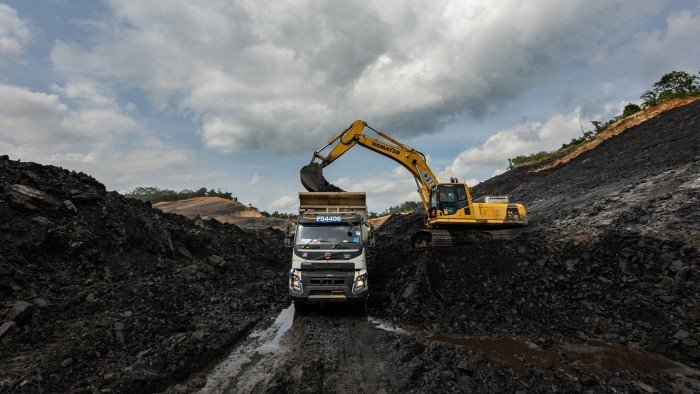
But Indonesia continues to allow new coal plants to be built. It also continues to impose a price ceiling on coal sold to power plants, essentially subsidising the fossil fuel and making it far cheaper than alternatives.
As a result, Indonesia has been one of the laggards in clean energy adoption. Government data shows investment in Indonesia’s renewable energy sector totalled $1.5bn in 2023, and it has stayed around the same level for the past six years.

“Indonesia is not competitive enough compared to the other countries based on the renewables capacity installed and policy developments,” says Shabrina Nadhila, Asia energy analyst at think-tank Ember. “The government needs to level the playing field for gas, coal and renewables.”
Indonesia’s energy minister Bahlil Lahadalia recently said Jakarta would retire coal plants early if it could get below-market loans from donors.
Other developing countries have also called for more concessional finance to speed energy transition. And, in fact, that has been one of the sticking points of the JETP programme.
JETP has been criticised by recipient countries for not offering enough grants or concessional loans, and relying too much on loans at market rates. Only a fraction of the promised funds has been disbursed so far.
However, despite the US withdrawal from the programme, other partner countries have promised to make it work. Germany stepped in immediately as the co-lead in the Indonesian JETP plan — the largest of the three at $20bn.
IEEFA’s Hauber said the US withdrawal could actually help JETP progress as US climate policies have recently prioritised oil and gas drilling, and increasing LNG exports. Its continued involvement may have led to delays, he says. “So if anything, a stumbling block has been removed with the US decision to leave.”
But south-east Asian governments still have to remove policy ambiguity and help the private sector.
Ember’s Shabrina says governments could offer guarantees, de-risking instruments or co-finance early stage projects for newer technologies to help draw private companies. “The bottom line is policy consistency and effective governance are key to building investor confidence,” she says.
