

Stay informed with free updates
Simply sign up to the Renewable energy myFT Digest — delivered directly to your inbox.
The UK government is set to reject a £24bn project to bring solar and wind power from the Sahara to the UK via the world’s longest subsea cable, concluding that it had too many “holes”.
Backers of the Morocco-UK Power Project being developed by Xlinks believed that it could bring enough electricity from Morocco to supply more than 7mn homes — about 8 per cent of Britain’s power needs.
But ministers were set to say on Thursday that they would not provide financial backing for the project, whose executive chair is Sir Dave Lewis, former chief executive of Tesco. Investors in the scheme include TotalEnergies, the French energy giant and the UK’s Octopus Energy.
Ed Miliband, energy secretary, concluded that the project did not “stack up” and that it had too many “holes”, according to people familiar with the situation. The decision — which will be conveyed through a ministerial statement — was first reported by Sky News.
Xlinks is considering other commercial options to develop the project, such as selling its power to large companies, according people familiar with the matter.
The previous Conservative government had encouraged the project and agreed in 2023 to declare it as being of “national significance”, which would have allowed it to streamline the planning process.
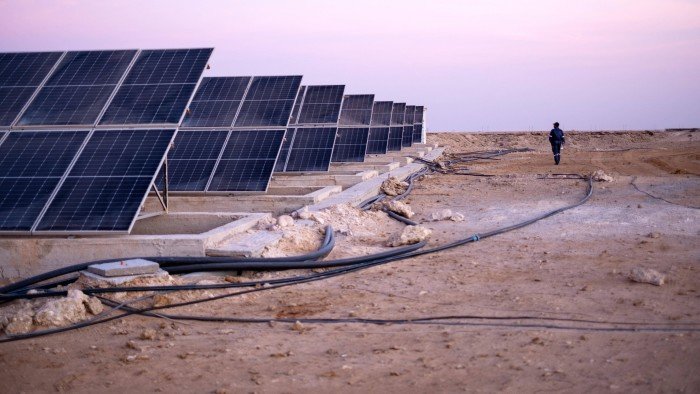
Under the plan, electricity from the Guelmim-Oued Noun region of southern Morocco would have been be supplied via cables running 3,800km under the sea to the tiny North Devon village of Alverdiscott, where it would be connected to the national grid.
It would have had generation capacity of 10.5 gigawatts, of which 7GW would come from solar and 3.5GW from wind.
The previous government believed the project “could play an important role in enabling an energy system that meets the UK’s commitment to reduce carbon emissions and the government’s objectives to create a secure, reliable and affordable energy supply for consumers”.
Xlinks had been negotiating with the government to secure a guaranteed fixed electricity price, known as a “contract for difference”. Such contracts are widely used to support renewable energy projects in the UK, helping to get the offshore wind industry off the ground.
Xlinks had suggested a fixed electricity price of £70 — £80 per MWh in 2012 prices which equates to about £100-£115 per MWh in today’s money. That is higher than the UK’s current day-ahead electricity price but lower than the fixed price awarded to the Hinkley Point C nuclear power project.
Miliband’s energy department is expected to say on Thursday that the government has decided not to enter advanced negotiations with the project. It will instead say that ministers want to focus on homegrown sources of renewable power.
Industry experts had warned that the scheme would also face practical challenges ranging from the length and depths over which it would need to lay cable and transport electricity, and potential bureaucratic hurdles because of the number of jurisdictions it would need to cross.
The Department for Energy Security and Net Zero and Xlinks declined to comment.
