

:max_bytes(150000):strip_icc():format(jpeg)/GettyImages-1061811522-af7e63fbb836440ea9c67076113b5434-36a7b2d27cde45ccb244146d50e0d4ea.jpg)
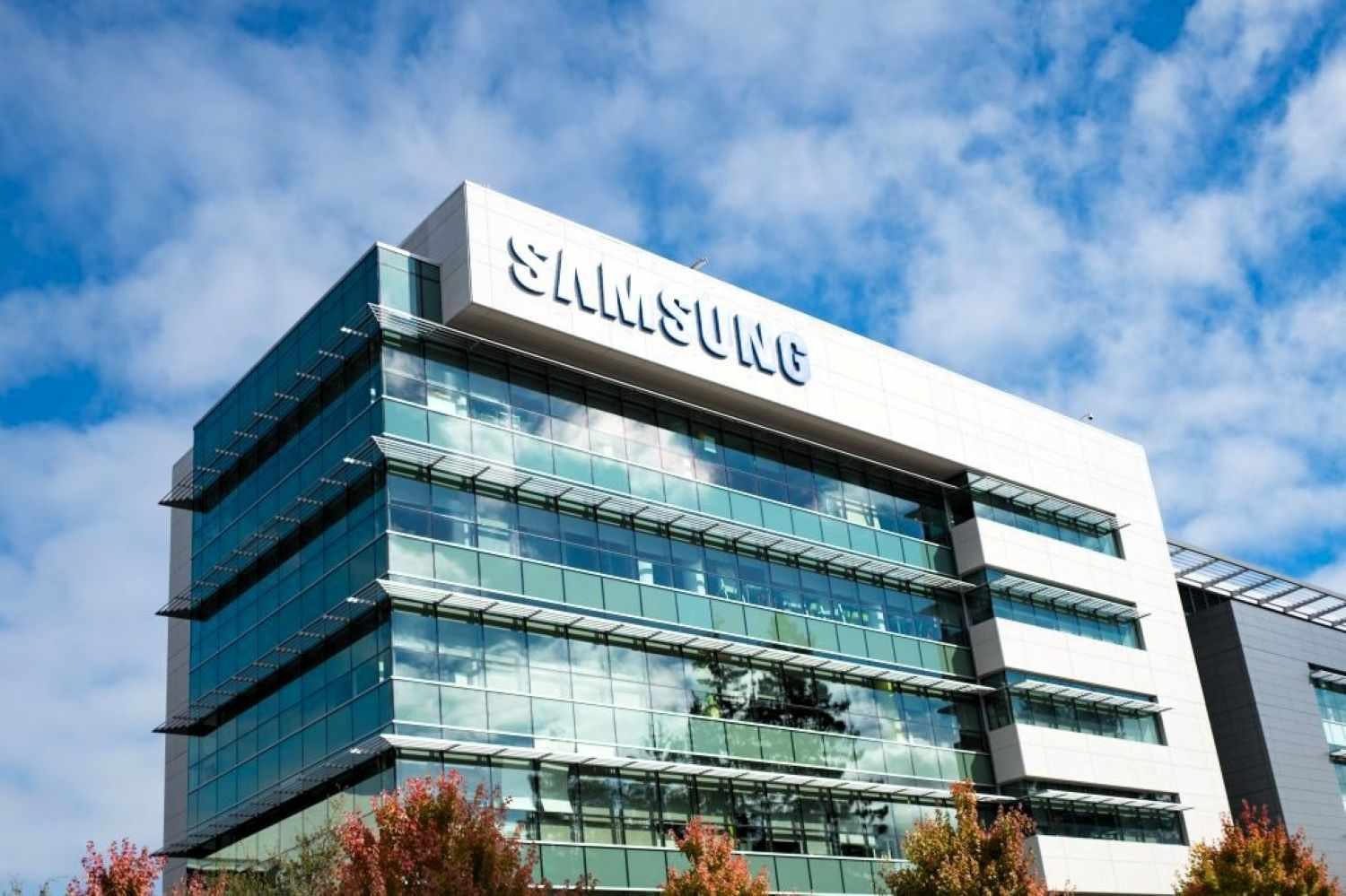
Samsung Electronics Co. Ltd. (005930), based in South Korea, is one of the world’s biggest electronics companies. It’s the largest enterprise owned by the giant Samsung Group, which is one of South Korea’s famed chaebols. Chaebols are powerful business conglomerates whose companies are controlled by a single family dynasty and that often receive beneficial tax treatment and subsidies from the government.
While chaebols face increasing criticism over their ownership structure and involvement in corruption scandals, they played a crucial role in South Korea’s rapid expansion from an agrarian economy into one of the world’s largest economies centered around manufacturing and high technology. Samsung Electronics, founded in 1969, originated during the early years of this transformation and quickly became one of the pillars of the South Korean economy.
Samsung today produces popular products like the Galaxy line of smartphones, tablets, and laptop computers. The company also sells industrial electronics products, including appliances, semiconductors, memory chips, and integrated systems. In 2024, Samsung generated revenue of KRW 300.9 trillion and profits of KRW 32.7 trillion. In U.S. dollars, these numbers are about $216.28 billion and $23.5 billion, respectively. Samsung’s market capitalization is KRW 459.66 trillion as of Sept. 4, 2025. In U.S. dollar terms, that’s about $330.34 billion.
Key Takeaways
- Samsung is one of the world’s largest electronic companies.
- Samsung’s expansion has led to the acquisition of Harman International Industries, SmartThings, LoopPay (now Samsung Pay), TeleWorld Solutions, and Novaled.
- Samsung reports diversity by gender in its management and workforce.
During most of the past five decades, Samsung Electronics has expanded primarily via internal growth. But in recent years, the company has executed a number of key acquisitions to bolster and accelerate its expansion, including in the fields of cloud computing and artificial intelligence (AI). Several of these deals are focused on technology to meet rising demand for products and services related to the ever-emerging Internet of Things (IoT).
We look at five of these acquisitions in more detail below. Samsung breaks out the revenue and operating profit of only one of these acquisitions.
Harman International Industries
- Type of Business: Automotive technology, audio and visual technology, connectivity
- Acquisition Price: $8 billion (announced)
- Acquisition Date: March 11, 2017 (completed)
- Annual Revenue (2024): KRW 14.274 trillion, about $10.2 billion (at September 2025 exchange rate)
- Annual Operating Profit (2024): KRW 1.307 trillion, about $938.8 million (at September 2025 exchange rate)
Samsung’s purchase of Harman International Industries in 2017 was its biggest acquisition ever. Founded in 1980, Harman International is a Connecticut-based electronics company that designs and engineers connected products and solutions for consumers, automobile manufacturers, and other enterprises. Its products include connected car systems, audio and visual products, enterprise automation solutions, and services that support the IoT. The company’s goods are marketed under leading brands such as Harman Kardon, Infinity, JBL, and Mark Levinson.
Samsung Electronics acquired Harman to expand its global presence in smart audio, connected, and automotive technologies, with a special focus on cars as they become increasingly automated and connected.
SmartThings
- Type of Business: Smart home and IoT applications
- Acquisition Price: $200 million (estimated)
- Acquisition Date: Aug. 15, 2014 (acquisition announced)
SmartThings, founded in 2012, designs software applications and operates an open platform for consumers to use in a smart home. SmartThings also employs the IoT. The platform enables users to monitor, control, and automate their homes from anywhere with a single mobile app. SmartThings can be used to turn on lights when users wake up and turn them off when they leave for work; it can lock doors and turn on security cameras; it can alert homeowners of water leaks or unexpected activity; it can turn on music, other home appliances, and more.
Samsung Electronics acquired SmartThings in 2014 and made it a part of the Samsung Open Innovation Center (OIC), an initiative responsible for bringing software and services innovation to the company. SmartThings is part of Samsung’s push toward connected technology and the IoT.
LoopPay (now Samsung Pay)
- Type of Business: Digital wallet platform
- Acquisition Price: $250 million (approximate)
- Acquisition Date: Feb. 18, 2015 (acquisition announced)
LoopPay, founded in 2013, offers a digital wallet platform that enables contactless payment solutions. The platform uses the company’s patented Magnetic Secure Transmission (MST) technology, whose development was facilitated by an early investment from Samsung. Samsung then acquired LoopPay in 2015 to strengthen its capability to offer seamless, safe, and reliable mobile wallet solutions. Samsung then created Samsung Pay by using the intellectual property that had belonged to LoopPay.
Samsung’s mobile payment app competes directly with Apple Inc.’s (AAPL) Apple Pay app, as both companies rush to increase their service revenue.
TeleWorld Solutions
- Type of Business: Network services provider
- Acquisition Price: Undisclosed
- Acquisition Date: Jan. 13, 2020 (acquisition completed)
TeleWorld Solutions, founded in 2002, is a network services provider, offering wireless engineering and consulting services. The company specializes in 5G cellular network technology, the intersection of AI and wireless networks, smart-city infrastructure, machine learning, and the IoT.
Samsung Electronics acquired TeleWorld Solutions in January 2020 to add to its capabilities in network infrastructure, especially in 5G. TeleWorld represents another step in Samsung’s goal to be a leader in smart infrastructure and IoT.
Novaled
- Type of Business: Organic electronics
- Acquisition Price: $347 million
- Acquisition Date: Aug. 9, 2013 (announced)
Novaled was founded in 2001 and eventually spun off by the Technical University of Dresden and Frauhnhofer Institute, two leading research institutions in Germany. The company provides proprietary organic materials and complementary innovative technologies for superior organic light-emitting diodes (OLEDs) used in digital displays and lighting.
The Novaled acquisition has helped Samsung to sharply boost the quality of its TV and other screens in the hotly competitive electronics market.
Samsung Electronics Diversity & Inclusiveness Transparency
As part of our effort to improve the awareness of the importance of diversity in companies, we have highlighted the transparency of Samsung Electronics’s commitment to diversity, inclusiveness, and social responsibility. The chart below illustrates how Samsung Electronics reports the diversity of its management and workforce. This shows if Samsung Electronics discloses data about the diversity of its board of directors, C-suite, general management, and employees overall, across a variety of markers. We have indicated that transparency with a ✔.
| Samsung Electronics Diversity & Inclusiveness Reporting | |||||
|---|---|---|---|---|---|
| Race | Gender | Ability | Veteran Status | Sexual Orientation | |
| Board of Directors | |||||
| C-Suite | |||||
| General Management | ✔ | ||||
| Employees | ✔ | ||||
